
Payroll decisions matter more in 2026 than ever. Employer National Insurance now sits at 15 percent. The Secondary Threshold has dropped to just £5,000 a year. HMRC has also brought in a tougher, points-based system for late filings.
Most owners compare payroll outsourcing vs in-house by looking at one number. That number is the provider’s monthly fee. But this single figure hides the full picture. It leaves out salaries, software, training, and the hours your team loses each month.
This guide breaks down the true cost of both models. You will see real 2026 figures, simple worked examples, and a clear decision framework. It works whether you run a five-person startup or a 200-person company. By the end, you will know which option fits your business best.
This guide is written for UK directors, finance managers, and HR leads. It is for anyone weighing up in house payroll vs outsourcing, whether for the first time or the tenth.
What Is the Difference Between In-House Payroll and Payroll Outsourcing?
Let us define each model first. This makes the cost comparison much easier to follow.
What Is In-House Payroll?
In-house payroll means your own staff run payroll from start to finish. Someone in your business works out pay. They deduct tax and National Insurance. They file RTI reports and manage pension duties. You own every step. You also own every mistake.
What Is Payroll Outsourcing?
Payroll outsourcing means handing that job to a specialist. The provider works out pay for you. They file RTI reports and manage auto enrolment. They keep your business compliant. You still check and approve the numbers. But the hard work sits with the experts, which is the core idea behind dedicated payroll outsourcing services.
How Each Payroll Model Works
In-house payroll runs on your own software. It uses your staff’s time each pay period. Outsourced payroll runs on the provider’s systems instead. You send them hours worked, new starters, and leavers. They handle the sums and the filings. Then they send you reports to approve. When you weigh in house payroll processing vs outsourcing, the real question is who owns each step, not just who presses the button.
Key Differences Between In-House and Outsourced Payroll
The main difference is ownership. In-house payroll gives you full control. But it also gives you full risk, which is why many growing UK firms turn to UK payroll management services to share that load. Outsourcing shares that risk with a specialist team. That team knows the rules and checks the work closely.
Which Payroll Model Is Right for Different Types of Businesses?
Smaller teams with simple pay often save more by outsourcing. Larger firms with a strong finance team can manage payroll in-house. But this only works well with proper training and good software. Every payroll in house vs outsourcing decision should start with your own numbers, not a general rule. We explore this in more detail later in the guide.
The True Cost of Running Payroll In-House
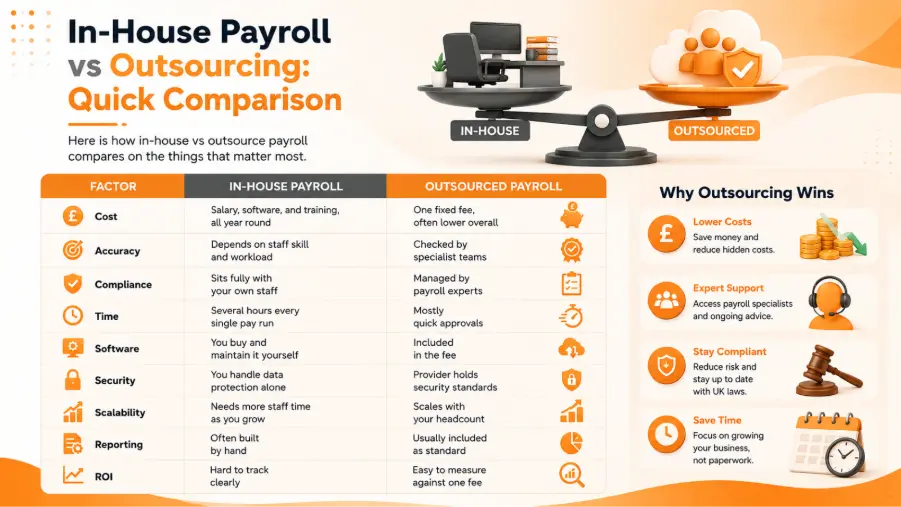
Many owners underestimate in-house payroll cost in UK. They only count one salary line. Any honest look at in house vs outsource payroll cost has to start with everything hidden behind that single number. The real total is much higher.
- Payroll salaries: A payroll executive earns around £28,000 to £35,000 a year outside London.
- Software: Payroll software costs £300 to £1,500 a year, depending on the number of employees.
- Training: Payroll rules change every April. Regular training is essential.
- Employer costs: Add employer National Insurance contributions (15%) and pension contributions on top of salary costs.
- Pension administration: Someone must manage auto-enrolment, employee enrolment, and opt-outs.
- Payroll processing time: Manual payroll processing can take several hours during each pay run.
- Payroll reporting: Preparing monthly payroll reports requires additional time.
- Payroll errors: Mistakes take time to correct and may result in HMRC penalties.
- Holiday cover: Someone must manage payroll when payroll staff are on annual leave.
- Recruitment: Replacing a payroll employee requires both time and recruitment costs.
- IT: Payroll software requires regular updates, maintenance, and secure hosting.
- Cybersecurity: Payroll data is highly sensitive and requires ongoing investment in security.
- Hidden opportunity costs: Every hour spent managing payroll is an hour not spent growing the business.
Add all of this up. A £30,000 payroll salary can quietly become £35,000 or more. Pension costs, National Insurance, software, and training all add up fast. This is the real payroll management cost in the UK that a monthly fee comparison never shows.
Payroll Outsourcing Costs in the UK
Payroll outsourcing cost in the UK figures usually sit between £4 and £12 per employee each month, as set out in ours detailed payroll outsourcing cost guide. This covers a fully managed service. Part managed options cost less, often £2 to £5 per employee. These UK payroll outsourcing fees vary by provider, but the ranges below give a reliable starting point.
Providers price this in different ways. Common models are per employee, per payslip, or a flat monthly fee for very small teams.
In 2026, typical costs run from £4 to £25 per employee each month. This depends on scope and complexity. Setup fees usually run from £100 to £1,000. Auto enrolment admin adds around £1.50 to £2 per employee, and this payroll admin cost in the UK applies whichever model you choose.
Most services include RTI filing, payslips, pension admin, year-end reports, and contact with HMRC on your behalf. The outsourced payroll cost usually stays flat month to month, which makes budgeting far easier.
Watch for These Hidden Outsourcing Costs
- Starter and leaver fees: Often £5 to £15 for each employee added or removed.
- Off-cycle payroll re-run fees: If you miss a payroll deadline, providers may charge £50 or more for an additional payroll run.
- Long-term contracts: Some providers require lengthy agreements and may charge high exit fees for early termination.
- Data export or exit fees: Some providers charge additional fees to transfer your payroll data when you switch to a new provider.
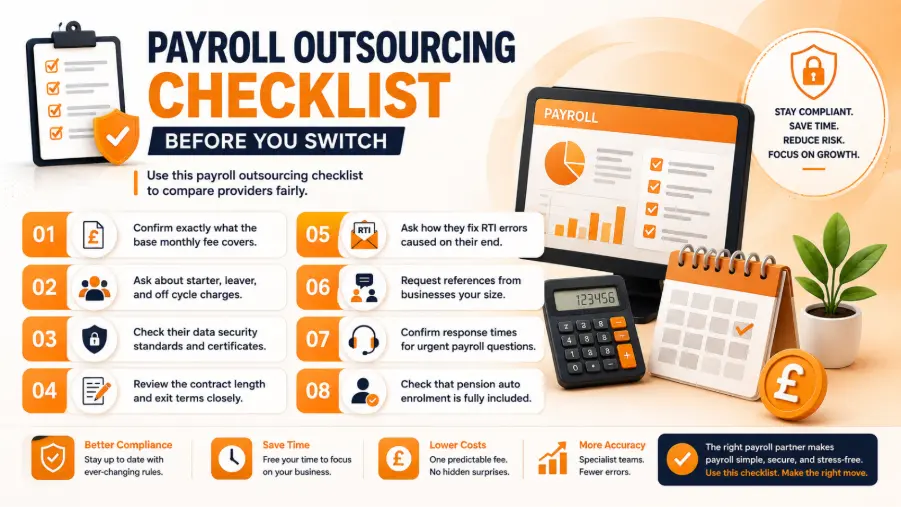
Questions to Ask Providers Before You Sign
- What services are included in the base payroll fee?
- How are starter, leaver, and off-cycle payroll changes charged?
- If an HMRC penalty results from the provider’s error, who is responsible for the cost?
- What is the contract length, and are there any exit or termination fees?
- Who should we contact if an issue arises on payroll day?
In-House Payroll Cost vs Outsourcing Cost
A fair payroll cost comparison looks past the headline fee. Direct costs are salary or provider invoices. Indirect costs include management time and training. Hidden costs include recruitment, IT, and fixing errors.
10 Employee Business Example
| Cost Type | In-House Payroll | Outsourced Payroll |
|---|---|---|
| Direct staff or fee cost | £32,000 salary | £960 to £1,440 a year |
| Software | £600 a year | Included |
| Training | £400 a year | Included |
| Employer NI and pension | Around £5,500 a year | Not applicable |
| Estimated annual total | Around £38,500 | Around £1,000 to £1,500 |
Cost Per Employee and Payslip
| Measure | In-House Payroll | Outsourced Payroll |
|---|---|---|
| Cost per employee per month | Often £15 to £40 or more | £4 to £12 typical |
| Cost per payslip | Rarely tracked | £2 to £15 depending on service |
| Three-year view | Cost rises with salary increases | Cost stays steady and predictable |
| Five-year view | Recruitment and training costs return | Fees stay clear and easy to plan |
Your own numbers may vary. But the pattern usually holds true. Outsourcing tends to cost less once every hidden cost is counted.
Payroll ROI Comparison
Payroll ROI comparison starts with total cost, not just the invoice. Total cost means every cost tied to payroll. This means direct costs and hidden costs too.
Try this simple sum. Return equals value gained minus cost. Then divide by cost and multiply by one hundred.
Value gained includes time saved and fewer errors. Say you pay £1,200 a month to outsource. But you save 15 hours of management time worth £30 an hour. That is roughly £450 in time value each month, before counting avoided fines.
Here is a worked example. A ten-employee business spends £38,500 a year in-house. Outsourcing costs around £18,000 a year for the same team. That is a saving of roughly £20,500 a year. This is before you even count reduced compliance risk.
Payroll Processing Time Savings
Payroll processing time savings are a major, often missed benefit. A typical in-house payroll run involves several steps. Staff collect hours, check overtime, and work out deductions. They review pensions and file RTI reports. For a small team, this can take four to eight hours every cycle.
Outsourcing cuts this down to a short handover and one quick approval. That step often takes under an hour. Over a year, this frees up weeks of time. That time can go back into sales, service, or growth.
Payroll Compliance Risks Every UK Employer Should Understand
Payroll compliance risk in the UK covers more ground than most owners expect. Knowing each area helps you avoid costly surprises.
- PAYE: Incorrect tax codes can lead to HMRC queries and employee dissatisfaction.
- RTI: HMRC uses a penalty points system for late Real Time Information (RTI) submissions. For monthly filers, reaching five penalty points results in an automatic £200 fine.
- National Insurance: Incorrect National Insurance categories or calculations can increase costs for both employers and employees.
- Auto-enrolment: Missing enrolment duties or making incorrect pension contributions can result in regulatory penalties.
- Statutory pay: Statutory Sick Pay (SSP) and statutory parental payments must be calculated and processed in line with current regulations, as explained in our guide to calculating Statutory Sick Pay.
- Student loans: Applying the wrong repayment plan can lead to incorrect payroll deductions.
- Attachment of earnings: Court-ordered deductions must be calculated and processed accurately.
- Construction Industry Scheme (CIS): Payroll for construction businesses follows separate HMRC rules and reporting requirements.
- Record keeping: HMRC requires employers to maintain accurate payroll records for the required retention period.
- GDPR: Payroll data contains sensitive personal information and must be stored and managed securely.
- HMRC penalties: Late payment interest is currently 7.75%. Employers can also face significant penalties for National Minimum Wage underpayments, including those caused by unpaid overtime.
- Common payroll mistakes: Missed filing deadlines, incorrect employee information, outdated software, and manual processing errors are among the most common causes of payroll issues.
Payroll compliance costs keep rising as the rules grow more detailed. Staying current takes real, steady effort.
Who Is Responsible if Payroll Mistakes Happen?
Legal responsibility for PAYE and RTI always sits with the employer. This is true even when payroll is outsourced. Many owners find this surprising.
Provider duties are set out in a service level agreement, or SLA. A strong SLA states clear response times. It also says what happens if the provider makes an error.
Shared responsibility works best in practice. You send data on time and get it right. The provider runs it correctly and files on time. A clear SLA shows who fixes what, and how fast.
Payroll Software vs Payroll Outsourcing
Payroll software vs outsourcing causes a lot of confusion. Software gives you tools. Outsourcing gives you a team.
| Factor | Payroll Software | Payroll Outsourcing |
|---|---|---|
| Cost | Licence fee plus your staff time | One all in service fee |
| Compliance | You track updates and rules yourself | Provider handles compliance for you |
| Automation | Strong for sums, weak for judgement | Mixes automation with human checks |
| Human support | Usually a basic helpdesk | Dedicated payroll experts |
| Security | Depends on your own IT setup | Provider holds strong security standards |
| Scalability | You still do the manual work | Scales on its own as you grow |
Software suits firms that want control and already have payroll skills in house. Outsourcing suits firms that want the job done, not just the tools to do it.
Which Payroll Solution Is Best Based on Business Size?
- Startups (1–5 employees): Most of the time, outsourcing is the cheaper option. You can just avoid the early cost of hiring an in-house payroll specialist with its overhead. Still, it is necessary to inquire about the provider’s minimum monthly charge before going for a service.
- Small businesses (6–20 employees): Payroll outsourcing is typically the most suitable option during this size stage. It provides businesses with a cost-effective way of managing employee payroll while allowing employees time for other important administrative tasks and growth of the business.
- Medium-sized businesses (21–100 employees): A partly managed payroll service can work best in this case since it grants you the freedom to keep some payroll functions under your control while still benefiting from the help of a payroll company for the tricky compliance-heavy tasks like tax calculations or filing returns.
- Bigger companies (100+ employees): It might be more efficient to have a full-time payroll staff as a direct cost-saver, but on the condition that you have a great payroll team, a highly reliable software system, regular staff trainings and sufficient holiday cover to keep the business running smoothly without a single employee being lost or left in the lurch.
- Businesses operating in multiple locations: Outsourcing payroll to a third-party can help create a consistent payroll approach for multiple locations and help lower compliance risks as well as make administration easier.
Signs Your Business Should Consider Outsourcing Payroll
- Time pressure: Payroll eats into hours meant for core management work.
- Compliance issues: You have had HMRC penalties or warnings this year.
- Rising costs: Your in-house payroll costs grow faster than your headcount.
- Growth: Fast hiring is making payroll more complex.
- Lack of expertise: Nobody on your team feels confident with current payroll rules.
How to Move from In-House Payroll to Payroll Outsourcing
- Planning: Choose a switch date that avoids your busiest payroll periods. The beginning of a new tax month is often the best time to transition.
- Migration: Securely share employee records, year-to-date payroll figures, and pension information with your new payroll provider.
- Testing: Run a parallel payroll cycle to compare the new provider’s calculations with your existing payroll before going live.
- Going live: Process your first live payroll with additional checks and approvals from both your business and the payroll provider.
- Monitoring: Closely review the first three payroll cycles to ensure accuracy before moving to your regular payroll approval process.
Decision Framework: Should You Keep Payroll In-House or Outsource It?
| Factor | Leans In-House | Leans Outsourcing |
|---|---|---|
| Employee count | Over 100, steady headcount | Under 100, or often changing |
| Payroll complexity | One simple pay structure | Multiple rates, shifts, or CIS |
| Budget | Can fund a skilled full-time hire | Needs a steady, lower monthly cost |
| Compliance risk | Strong in-house knowledge already | Limited payroll knowledge on staff |
| Growth plans | Slow, steady growth | Fast hiring or new sites |
| Internal expertise | Trained, confident payroll staff | No dedicated payroll specialist |
Score your business honestly against each row. Most small and medium firms lean toward outsourcing once hidden costs are counted, a pattern explored further in our review of the pros and cons of outsourcing payroll in the UK.
Frequently Asked Questions
For most small and medium UK firms, yes. This is true once salary, software, training, and risk are all counted.
Usually, £4 to £12 per employee each month for a full service. Part managed options cost less.
The employer stays legally responsible for PAYE and RTI. This is true even when payroll is outsourced.
Yes. Switching at the start of a new tax month makes the move smoother.
Most full-service providers include this. Always confirm it before you sign.
It depends on your time and confidence. Software still needs someone to run it correctly each cycle.
A strong SLA should state how the provider covers fines caused by their own mistakes.
Conclusion
There is no single right answer to in house payroll vs outsourcing. The right choice depends on your staff numbers, payroll complexity, budget, and growth plans.
If your business is small, growing fast, or short on payroll skills, outsourcing usually means lower total cost and far less risk. If you run a larger, steady team with strong payroll knowledge, in-house payroll can still work well. It just needs proper resources and constant updates as rules change.
Whatever you choose base it on total cost, not the headline fee. Count the hidden hours, the training, and the compliance risk. That is the only way to see the full picture clearly.
You do not need to make this call alone. Speak with the payroll experts at Eco Outsourcing for a clear, no obligation review of your current process. Contact us today, we will help you see your true payroll costs, flag any compliance risks, and show you whether outsourcing could boost your efficiency and long-term return. No pressure, just clear guidance on the right next step for your business.