
Introduction: The Outsourcing Imperative for 2025
Running a business right now is not easy. Every week, there are new AI tools, fresh competitors, and shifting customer habits. Everyone says you need to scale your business, but nobody really explains how to do it without running yourself to the ground. That is where outsourcing comes in. People used to look at outsourcing as nothing more than a cost-cutting move. Hire cheaper labour, keep expenses down, simple. And sure, a lot of businesses still think like that, about 63% according to surveys. But here is the part that matters more in 2025: even more companies, about 65%, are outsourcing so their own people can stay focused on bigger goals. That tells you something has changed. Think about it. A small shop owner trying to sell online does not always know how to run ads or build a website. A tech startup might have engineers but no support team. A mid-sized firm wants to enter a new market but does not have the legal or HR setup for it. In all these cases, cost-effective outsourcing solutions are not just helpful; they are the only realistic way forward. And when you let outside experts handle the things you do not do well, you give your team more breathing space. They get to spend time on sales, strategy, product, the stuff that makes money. That is how you really grow and scale your business, not by piling every task onto the same few people until nothing moves. So, the role of outsourcing is changing. It is no longer just a budget trick or a quick patch. It is becoming a core part of how smart companies compete. If you use it only to save money, you will always be behind. If you use it to innovate, to move faster, and to scale your small business or startup with confidence, you will have an edge in 2025 and beyond.
The Strategic Case for Outsourcing in 2025
From Cost-Cutting to Growth Catalysis
Look, for years, outsourcing was a dirty word. It meant cutting jobs at home, moving work offshore, and trying to save a few dollars. That is still part of it, and most surveys show that more than half of businesses still see cost-cutting as the main reason. But the truth is, in 2025, that is only half the story. If you want to scale your business, outsourcing has become much more than a budget move.
The New Paradigm: Outsourcing as a Core Growth Strategy
Now, outsourcing is a growth tool. Think about it: a small business owner cannot be the accountant, the marketer, the recruiter, and the tech support guy all at once. Something must give. By outsourcing non-core tasks, you are not just saving money; you are buying back time and energy. That is how you growand scale your business, because your best people are not stuck doing jobs that do not push the company forward. Take an online store owner. They may be great at finding products and building a brand, but terrible at running ads or managing customer emails. Outsourcing those areas means they can focus on sales and customer loyalty instead of spending late nights answering support tickets. Or look at a mid-sized company that wants to open in another country. Hiring a full team there is expensive and risky. Using cost-effective outsourcing solutions lets them test the waters without taking on huge risks. This is what people mean when they talk about outsourcing business growth. It is not about trimming fat anymore. It is about stretching capabilities. You are reallocating resources, moving talent and money into high-impact areas like product development, market expansion, and strategic partnerships. That is what gives a business its edge in today’s market. And the companies that get this? They will pull ahead fast. The ones that still think outsourcing is just cheap labour will lag, stuck fighting fires instead of building. The winners are those who treat outsourcing like a lever: something that lifts their entire operation and lets them scale their small business or even a larger one with far less friction.
Unlocking Efficiency and Focusing on What Matters
Outsourcing frees up time. That is the big win. So much of a leader’s day gets eaten by admin reports, emails, and small jobs. Almost 40% of the week, gone. Work that does not make money. Those jobs can be pushed out, handled by someone else, and that’s when growth becomes possible. The tasks are always the same. Bookkeeping. Customer service. Data entry. Necessary, but not the reason a business grows. Once those are off the desk, the main team can get back to sales, building, and planning. The real work. And here is the part people miss: the effect on the team itself. Nobody wants to sit all day doing repetitive jobs. It wears people down. Hand that work to an outsourced team, and your own staff feel lighter. Less burnout, more motivation. That energy spreads, and suddenly the culture feels different. So, the link is obvious. Outsource the low-value stuff. Keep the focus on high-value work. Efficiency outside, focus inside. That is how you keep people engaged and the business moving forward.
Financial Leverage: More than Just Labour Costs:
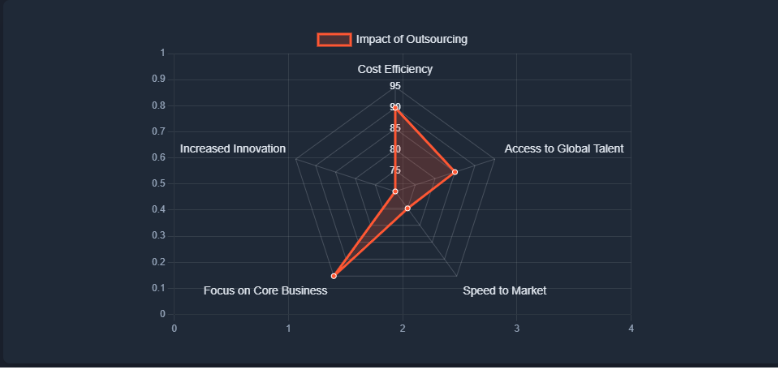
Outsourcing is about cheaper labour. Sure, it can cut operating costs by close to 60% compared with keeping everything in-house. But the bigger win is what you do not have to pay for. Hiring. Benefits. Office rent. Equipment. Even pricey software subscriptions. Providers already have all that in place. That is why people talk about cost-effective outsourcing solutions:because it is not just wages, it is the whole package of savings. Take recruitment as an example. An outsourced hire might cost 15–25% of the salary. At first, that feels steep. But compare it with running an internal HR team year-round, with fixed salaries, benefits, and training, and suddenly outsourcing looks lighter. You are swapping fixed costs for variable ones. Pay when you need it, stop when you do not. That flexibility matters. This is where the numbers tell the story. In-house models lock you in. Outsourced models let you adjust. For a business trying to scale your business, that agility can be just as valuable as the raw cost savings. Sometimes more.
| Aspect | In-House Model | Outsourced Model |
|---|---|---|
| Direct Costs | Salaries, benefits, recruitment software/ATS subscriptions, training costs | Agency or RPO fees (fixed, per-hire, or percentage-based) |
| Hidden Costs | Productivity loss from prolonged vacancies, limited candidate reach | Less direct control over candidate engagement, potential culture misalignment |
| Technology | Requires significant investment in software, tools, and infrastructure | Minimal technology investment, as providers have advanced tools |
| Flexibility | Difficult and time-consuming to scale teams up or down | Highly scalable, with costs that vary based on hiring volume |
| Focus | Internal teams are burdened with non-core, administrative tasks | Allows in-house teams to focus on strategic, revenue-generating activities |
The Power of Scalability and Flexibility
The truth is that scalability is the real strength of outsourcing. This is the core of how to scale your business. Markets move fast. Startups grow unevenly. Online shops get slammed with seasonal demand, then quiet weeks after. Outsourcing lets you push up resources when it is busy, then cut back when it is slow. Simple. Hiring and layoffs inside a company take time and money. Everyone knows that. Outsourcing skips that step. You get the help when you need it, and you are not stuck with the cost when things change. That is what keeps a business steady when the market is not stable. It is on-demand. No long recruiting cycles. No delays with training. Just the right number of people at the right time. That kind of agility is what keeps growth moving. This is why outsourcing now sits at the center of scaling your online business or scaling your small business. It is the breathing room companies need to adapt without slowing down.
What to Outsource: Identifying Functions for Expansion
Outsourcing is not just paperwork or back-office work anymore. In 2025 it covers every area. Companies use it to save money, yes, but also to grab skills they do not have. That is how growth happens.
Beyond the Back Office
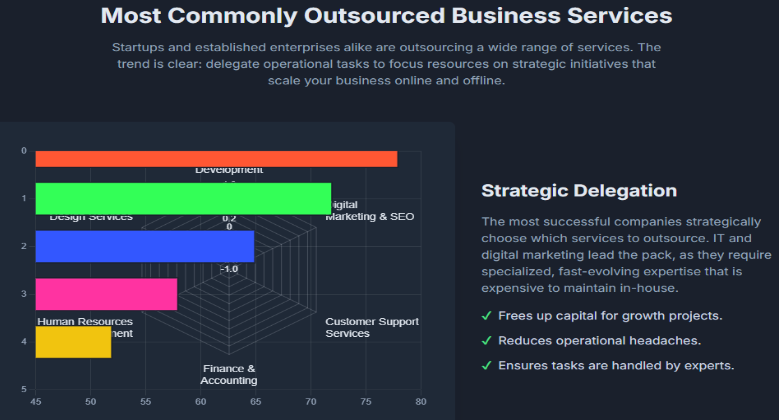
The BPO market is massive, heading toward 415 billion USD. Why? Because outsourcing is tied to growth now. Startups especially rely on it. Business outsourcing for startups gives them talent and tech right away. No need for full-time hires. They can scale faster, cheaper.
What to Outsource
It depends, but a few areas always come up.
IT Services
IT is first. Blockchain. AI. IoT. Hard to hire in-house. Outsourcing gives access to that talent. Costs drop. For example, one outsourced IT project saved a company over 42,000 USD a month. Plus, better security and cloud support.
Customer Service
Support is big too. Outsourcing gives 24/7 coverage. Multilingual help. Human plus AI teams. Faster replies, happier customers. That is why outsourcing services for businesses often starts here.
Marketing & Creative
Marketing is another. SEO, content, design, video. Hiring in-house is costly. Outsourcing gives specialists without overhead. ROI improves quickly. A clear case of how outsourcing drives business expansion.
HR & Recruitment
HR is growing as well. Recruitment is slow and expensive internally. Outsourcing fills roles faster. Find global talent. Payroll and benefits also fit here. It is how you scale up your business without a heavy HR department.
Other Areas
Finance, accounting, R&D, and analytics. All in common. Save money, get accuracy, and speed up development.
The Roadmap for Success
Outsourcing helps, but there are risks. There can be extra costs, security problems, quality issues, and miscommunication. The biggest one is control. Relying on a single vendor makes you less flexible. Another is knowledge loss if you do not plan for proper knowledge transfer. The point: outsourcing works if managed well. Pick carefully. Set expectations. Keep oversight. That is how you get the benefits without the downsides. Outsourcing has changed a lot. It is not just back-office work anymore. In 2025, the range of what you can hand off is much wider. Companies now use outsourcing to get specialised skills, the kind that are hard or expensive to build in-house. It has become less about cutting costs and more about gaining what you need to expand.
Beyond the Back Office: The Rise of Strategic Outsourcing
The outsourcing market keeps climbing. By 2025, BPO is expected to hit around 415 billion USD. That growth is not only about saving money. It shows how companies now see outsourcing to plug skill gaps and bring in expertise they do not have in-house. It has become a tool for innovation, not just cost-cutting. For startups, this shift is huge. Business outsourcing for startups means they can tap into skilled people and advanced tools right away. No big salaries. No heavy overhead. Just access. That is how young companies scale faster and keep costs under control at the same time.
A Department-by-Department Breakdown for Growth
Choosing what to outsource is not random anymore. It has become a strategic decision. By 2025, certain areas stand out as clear candidates.
IT Services
Tech is at the outsourcing IT to get access to advanced tools: Blockchain, AI, IoT. Hiring that level of talent in-house is expensive and slow. Outsourcing makes it easier. An analysis showed one company saving about 42,000 USD a month by outsourcing a software project. The reason is simple: you get a pool of specialists in areas like cybersecurity, cloud management, and development. Skills that are either too rare or too costly to build internally.
Customer Service
Support is one of the top areas to outsource. Companies do it because it works. 24/7 coverage. Multilingual agents. Human plus AI teams. All that means faster replies and better customer care. Handing this off improves response times. It also lifts customer satisfaction. Outsourcing services for businesses in this area solves the talent shortage in customer experience. It keeps the service consistent and handled by people who know what they are doing.
Marketing and Creative Services
Marketing is another clear win. Outsourcing often shows results in months. ROI goes up fast. Instead of paying for a full team or expensive software, companies get access to experts in SEO, content, and analytics. Creative work fits here, too. Writing. Design. Video. Passing these jobs outside makes it easier to scale marketing without heavy costs. A simple example of how outsourcing drives business expansion.
Human Resources & Recruitment
HR outsourcing is climbing fast. Recruitment is the focus. Why? Because it opens doors to talent you might never find locally. It closes skill gaps quickly. When you push hiring outside, the in-house HR team gets space back. They can focus on training, staff growth, and engagement instead of drowning in admin. Payroll and benefits can be outsourced, too. Less pressure on the core team. This is one of the easiest ways to scale up your business. Build a stronger workforce, build it faster, and do it without blowing the budget. Simple.
| Strategic Function | Key Benefits of Outsourcing | Relevance to Scaling |
|---|---|---|
| IT Services | Cost savings, access to niche skills (AI, IoT), improved security | Enables adoption of innovative technologies without significant in-house investment, accelerating digital transformation. How to scale your small business |
| Customer Service | 24/7 availability, multilingual support, improved customer satisfaction | Provides the ability to handle fluctuating demand without hiring, reducing operational overhead. Scale your service business |
| Marketing & Creative | Higher ROI, access to specialists (SEO, content), lean operations | Rapidly expands marketing reach and creative output to attract and convert new customers. How to grow and scale your business |
| HR & Recruitment | Reduces fixed costs, faster time-to-hire, access to global talent | Streamlines the process of building a high-performing team to support rapid expansion. Business outsourcing for startups |
| Finance & Accounting | Eliminates overhead costs, ensures accuracy and compliance | Frees up internal resources and capital for revenue-generating activities and strategic investment. |
| R&D & Data Analytics | Leverages external expertise, accelerates product development cycles | Provides data-driven insights and innovation to gain a competitive advantage and drive new revenue streams. |
The Roadmap for Success: Mitigating Risks and Managing for Growth
Outsourcing saves money. It helps scale. Gives access to skills. But it is not perfect. Risks are there. Needs control.
Navigating the Pitfalls of Outsourcing
Hidden costs show up often. Around 30% of outsourcing contracts run into extra expenses. Savings shrink fast. Data is another worry: last year, more than 60% of businesses faced at least one breach. Outsourcing can make that worse if security is weak. Quality can drop. If oversight is low, results do not match expectations. Add time zones and communication breaks. Control is a big one. Depend on one vendor and you get stuck. If they fail, you fail. Knowledge loss, too. No transfer plan? Teams inside forget. Gartner says it can take years to rebuild that knowledge. Bottom line: outsourcing works only if managed right. Risks are real. Stay disciplined. Keep oversight tight.
Building a High-Performance Outsourced Team
Managing the team is the key. Do it right, and outsourcing works. Do it wrong, savings vanish. Simple. That is the point behind managing outsourced teams for growth. What helps? Clear expectations. Regular check-ins. Treat the outsourced team like they are part of your own staff. Not outsiders. Companies that track performance with clear metrics see better results, about 22% higher efficiency. Start smart. Do due diligence. Check the vendor. Look at their history. Test them first. A small pilot or MVP shows whether the partnership is a good fit before scaling up. Once it is rolling, use tools to stay aligned. Build a communication plan. Hold people accountable. Keep it steady. Outsourcing is not just a transaction. It is a partnership. Needs trust. Needs respect. If you skip that, quality drops, retention drops, and the benefits are gone.
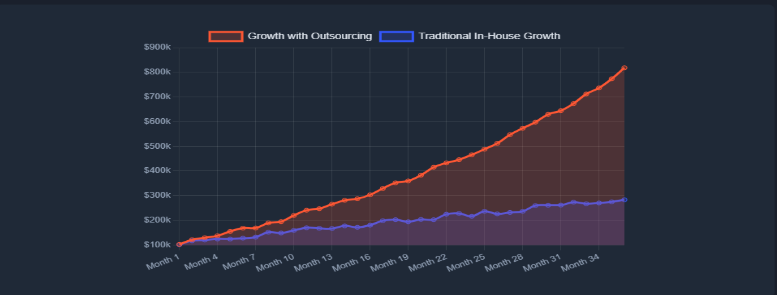
Table 3: Common Outsourcing Risks and Mitigation Strategies
| Risk | Description | Mitigation Strategy |
|---|---|---|
| Unforeseen Expenses | Costs arise from scope changes, hidden fees, or currency fluctuations | Sign a clear contract with a detailed scope of work and a transparent pricing model. Use a Discovery Phase to establish an accurate budget and timeline. |
| Security Risks | The external vendor may have access to confidential business and customer data | Sign a comprehensive Non-Disclosure Agreement (NDA) before sharing any information. Research the vendor's security practices and reputation for protecting intellectual property. |
| Poor Quality | The final product or service fails to meet the company’s standards | Carefully vet partners by reviewing portfolios and client feedback. Implement a Quality Assurance (QA) plan with regular reviews and inspections throughout the project. |
| Miscommunication | Language barriers, time zone differences, or unclear instructions lead to project delays | Set clear expectations from the start. Use collaboration tools and schedule overlapping work hours. Be culturally sensitive to different work styles. |
| Vendor Dependency | Over-reliance on a single vendor can make it expensive to switch providers | Work with multiple vendors where possible to diversify risk. Ensure that contracts secure ownership of all code and data. |
Real-World Case Studies: How Giants Scaled with Outsourcing
Outsourcing works. Real companies prove it.
Case Study 1: WhatsApp
WhatsApp started small. Two ex-Yahoo employees. Little money. Just an idea. They could not afford a team. So, they outsourced the first iOS app to a freelancer online. That gave them the skills they needed fast. As the company grew, they kept using remote talent. Outsourcing stayed in the mix. WhatsApp scaled fast. Millions of users. Later sold to Meta for 19 billion USD. The lesson is simple: talent is everywhere. Outsourcing lets you use it and grow big.
Case Study 2: Slack
Slack began as a game company. The game failed. But their team chat tool worked well. They did not have the budget for a big design team. So, they outsourced design to a Canadian agency. That agency gave Slack its clean, simple look. The tool caught on. Slack scaled quickly. It became one of the top workplace apps worldwide. Lesson: Outsourcing the right piece at the right time can turn something small into something huge.
Case Study 3: Google’s Strategic Approach
Outsourcing is not just for startups. Big players use it too. Google is a prime example. The company outsources huge parts of its workload. The reason is to stay flexible and reach talent that it does not always have in-house. By 2018, contractors outnumbered direct employees. That says a lot about how central outsourcing is to Google’s model. It is not only about cost. Outsourcing keeps projects like AdWords moving fast. It lets Google avoid heavy hiring costs while still bringing in the skills needed for growth and innovation.
Other Success Stories
Slack’s early outsourcing choices saved money and helped it scale into a unicorn quickly. Microsoft, even with revenue above 198 billion USD, still uses outsourcing for a wide range of work. If companies that big rely on it, the point is clear: outsourcing is not just a side tool, it’s core to how the most effective ways to scale your business work.
How Eco Outsourcing Helps You Scale Smarter
Finding the right outsourcing partner can make all the difference, especially in a business landscape as fast-paced and unpredictable as today’s. That is where Eco Outsourcing makes its mark. We are not just here to reduce overheads; we are here to help you operate more efficiently, move faster, and adapt quickly to whatever the market throws your way. Whether you are building something from scratch or expanding an established business, we provide real-world support in key areas like IT, customer support, marketing, HR, and finance. Our team helps fill the gaps, allowing you to focus on growing your business without the burden of hiring full-time staff you may not need year-round. Need help building an international support team? Want to launch marketing campaigns that perform? Trying to lighten the load on your internal team? We have helped businesses like yours do exactly that. Please think of us not as a vendor, but as a hands-on partner.
At Eco Outsourcing, we see outsourcing as an accelerator, not a shortcut. It is about putting the right systems and people in place, so your business runs smoother, responds faster, and has the breathing room to grow. We are here for the long haul to support your success, not just your task list.
FAQs
If you want to scale your business, do not just work harder. Work smarter. The easiest step is to move out of the jobs that drain time: admin, payroll, and customer support. They are important, but do not drive growth. Pass them to a partner. That is how you get cost-effective outsourcing solutions working for you. It frees your team for strategy, sales, and product. No need to keep hiring for every role. Less overhead, more flexibility. Done right, outsourcing becomes the basis to scale your small business and keep growth steady for the long run.
Scaling a business is not about working harder. It is about staying flexible and bringing in the right skills at the right time. Outsourcing makes that possible. You can reach experts worldwide without paying the heavy cost of hiring everyone in-house. That means less overhead, smoother workflows, and quicker responses when demand changes. IT, customer service, and marketing can be bottlenecks if you try to do it all yourself. Hand them out. That way, you move faster, focus on growth, and keep scaling your small business without burning out resources.
Small businesses hit the same walls. Too few people. Too many costs. Outsourcing helps take that weight off. Hand out jobs like bookkeeping, marketing, and IT. Get skilled help without paying full-time salaries. It matters most when work comes in waves. Busy one month, quiet the next. Staying lean is easier this way. Outsourcing keeps you competitive. Let’s react fast. Keeps growth affordable. That is the point. Scaling your business with outsourcing makes sense. Small firms grow steadily, save money, and still focus on what they do best.
The first step is knowing what to keep and what to hand off. You do not need to do everything inside your company. Outsource things like IT, HR, marketing, or finance. That clears space and frees capital. Your team gets time back to focus on sales, products, and strategy, the real drivers of growth. Outsourcing also gives instant access to tools and expert skills that speed things up. The balance is simple: focus on what moves the business forward and let partners handle the rest. That is how you grow and scale your business without constant roadblocks.
Outsourcing pushes growth because it lets a company scale fast. You can add or cut resources instantly. Hiring takes months. Outsourcing takes days. No long contracts tying you down. That flexibility matters. It helps when you want to test a new market or try new tech. Customer service and IT can both be outsourced without heavy costs. There is another benefit too. Local partners bring local knowledge, which makes expansion smoother. Less overhead, more efficiency. That is why outsourcing services for businesses has become a direct path to steady, sustainable growth in tough markets.
Conclusion: Your Business, Unconstrained the Future of Outsourcing in 2025
Outsourcing is not on the side anymore. It is the front and centre in 2025. The numbers tell the story. The market is heading past 525 billion USD by 2030. IT outsourcing is more than half of that. Around 65% of companies say they outsource to free up their own teams, not just to cut costs. That shift matters. It is no longer only about saving money. It is about three wins: efficiency, flexibility, and talent. Skills you cannot always hire inside. Together, those three keep a business competitive. Routine jobs such as payroll, data entry, and support can move out. That gives people inside time for revenue and strategy. Deloitte reports that firms outsourcing core support functions grow close to 20% faster than peers who do not. Simple lesson: outsourcing is not cutting corners. It is growth. To develop and scale your business, treat outsourcing as long-term. Not a quick fix. Not a stopgap. A foundation. That is what unlocks potential and keeps a company unconstrained.