
The Future of Outsourcing in the UK: Trends to Watch in 2026
- Home
- Business Process Outsourcing
- The Future of Outsourcing in the UK: Trends to Watch in 2026

The Strategic Imperative: Why the Future of Outsourcing in the UK is Accelerating
The geography of Outsourcing in the UK is witnessing a profound metamorphosis as businesses move toward 2026. What was formerly seen as a cost-cutting measure has evolved into a strategic approach centred on invention, adaptability, and speed. Companies are no longer outsourcing just to save money; they are doing it to stay nimble and competitive in a fast-changing world. This shift marks the dawning of the Future of Outsourcing, where value creation takes priority over cost reduction.
Redefining Outsourcing in the Digital Age
The motivation behind Outsourcing has changed dramatically. While saving money still matters moment’s associations priorities result in direct impact on performance, like access to technical gifts, brisk product launches, and the Integration of emerging technologies. Modern UK business leaders assert that Outsourcing helps them invest in innovation, accelerate time-to-market. and make further adaptable operations. The thing is no longer limited to reducing charges; it is about achieving measurable issues that strengthen long-term growth and adaptability.
Market Outlook 2026: Exponential Growth Driven by Specialisation
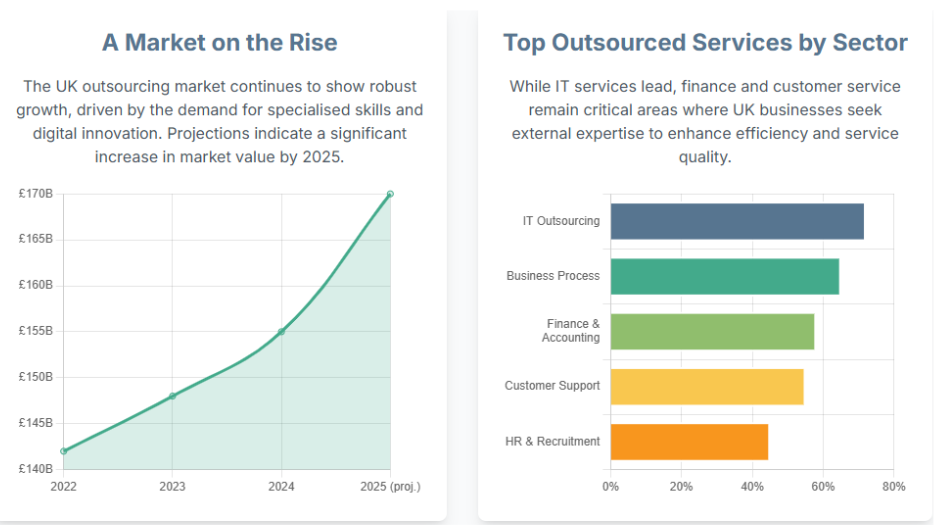
The UK outsourcing sector is poised for strong, sustained growth, buttressing its pivotal part in the public sector. Judges prognosticate that outsourcing conditioning will rise sprucely as further associations seek flexible and scalable results. Still, the growth pattern is shifting from bulk Outsourcing to value-driven specialization. Traditional Business Process Outsourcing (BPO) may be decelerating, but technology-concentrated services like software development, pall operation, and AI and automation in UK outsourcing are leading the way. This trend highlights that the Future of Outsourcing in the UK belongs to enterprises offering deep, specialised moxie rather than low-cost services.
Top outsourcing companies are increasingly defined by their capability to deliver transformative business issues through their sphere of specialization and innovation. Metropolises like London and the East Midlands continue to lead in relinquishment, with diligence like finance, technology, and the public sector driving demand. Eventually, this elaboration confirms that the Benefits of Outsourcing in the UK are no longer confined to cost reduction; they include brisk digital metamorphosis, better functional adaptability, and strategic inflexibility. For businesses looking to maximise these earnings, engaging Expert Financial Planning and Analysis Services ensures that outsourcing opinions align with broader business objectives and fiscal effectiveness.
UK Outsourcing Market Growth Forecast and Key Drivers (2025-2030)
Case Study: Improvement of Speed and Accuracy Through AI-Driven Outsourcing
A UK-based financial services provider was grappling with slow reporting and pressure from compliance requirements. Through working with an AI-powered partner to facilitate finance and account processes, mundane tasks, mundane tasks, including payroll, reconciliations, and reporting, were automated. This minimised mistakes, sped up forecasting and freed up the internal team to work on strategic forecasting, not manual wage calculations.
Client Quote: “AI-enabled Outsourcing didn’t displace our team; it made our team stronger. So, we got accuracy, speed, and actual financial insight.”
| Metric | 2024 Value (USD) | 2030 Projected Value (GBP) | Projected CAGR (2024–2030, 6.5%–8.5%) | Primary Driver/Sector |
|---|---|---|---|---|
| Revenue (Overall UK Market) | $219.5 Billion | $387.3 Billion | 10.2% | Digital Transformation, Specialized Expertise, Efficiency |
| Largest Segment (2024) | Engineering Services | IT/Software Development (Anticipated Shift) | Fastest Growth Rate (E-Services) | Access to scarce, high-demand skills (AI, Cloud) |
| Transaction Motivation Shift | 70% Cost Savings (2020) | 34% Access to Specialized Talent (Top Priority, 2025) | N/A | Focus shift to resilience, time-to-market, and AI adoption |
Trend 1: AI and automation in UK Outsourcing – Augmentation, not replacement
The Integration of AI and automation in UK outsourcing is arising as one of the most transformative trends shaping the Future of Outsourcing. Rather than replacing mortal gifts, these technologies are enhancing how businesses operate and how Cing ice profiteer delivers value.
The AI Adoption Reality and the Outsourcing Mandate
Across the UK, adoption of AI and generative technologies has become nearly universal. Yet, while most associations have enforced AI tools, many have achieved full-scale business metamorphosis. This gap between enthusiasm and results presents a significant opportunity for the Top outsourcing companies. Numerous UK enterprises face patient walls like compliance complications, a lack of proficient internal staff, and poor data quality. These challenges show that AI integration is not a simple process; it demands governance, data moxie, and strategic perpetuation. Outsourcing providers bridge this gap by offering scalable results that enable brisk, safer, and more effective AI relinquishment.
Transforming Core Functions with Intelligence
AI is now embedded into outsourced operations across multiple diligence, evolving from simple robotisation into a force for deep knowledge addition and more intelligent decision-making.
Finance and Accounting
The field of Outsourced accounting services has been fully converted by intelligent robotisation. Automated workflows now handle repetitive fiscal tasks like payroll and reporting, reducing errors and speeding reversals. Specialist providers help businesses remain compliant with UK duty laws while freeing internal brigades to concentrate on advanced-value strategy and predictive functions. This elaboration has made finance departments nimbler and data-driven, with Accounts, Bookkeeping and analysis getting more strategic than functional.
Client Experience (CX) and BPO
In Business Process Outsourcing, AI is revolutionizing client service operations. Advanced analytics tools now dissect client relations in real time, enabling service providers to anticipate client requirements and epitomise engagement. AI-powered virtual sidekicks and voice systems are making client experience operations more intelligent, harmonious, and cost-effective, turning what was formerly a reactive support function into a visionary driver of client fidelity.
Financial Services and Risk Mitigation
The UK’s fiscal sector leads the way in applying AI to outsourced functions such as fraud discovery, cybersecurity, and process optimisation. As nonsupervisory norms strain, budgetary institutions are turning to outsourcing mates with technical AI capabilities to ensure compliance while maintaining innovation. The Future of Outsourcing in finance lies in moving beyond introductory executive services toward Knowledge Process Outsourcing (KPO), where intelligent robotisation drives perceptivity, threat reduction, and long-term value creation.
The AI Governance Advantage
As AI continues to evolve, so does the need for strong governance frameworks. The strategic edge for Top outsourcing companies lies not only in planting AI but also in managing it responsibly. With the utmost directors now embracing AI within outsourced services, contracts increasingly include unequivocal performance criteria and governance clauses that balance innovation with responsibility. The rise of Generative AI brings challenges around data protection, intellectual property rights, and ethical operation. UK controllers, including the Financial Conduct Authority (FCA), are working to encourage innovation while ensuring responsible use of large language models. For UK businesses, this underscores the significance of partnering with outsourcing providers able to manage complex data quality, IP, and compliance pitfalls. Effective governance ensures that AI-driven outsourcing remains secure, transparent, and strategically profitable.
Trend 2: The Dominance of Hybrid Outsourcing Models
In a moment’s changeable global terrain marked by shifting geopolitical factors, unstable force chains, and a growing gift deficit, companies are looking for results that offer inflexibility, control, and cost effectiveness. This has led to the wide relinquishment of mongrel outsourcing, now a defining point of the Fetterolf Outsourcing in effect.
What are Hybrid Outsourcing Models?
Mongrel outsourcing combines multiple delivery locales onshore, nearshore, and coastal with both internal and external brigades to achieve the ideal balance between savings, control, and access to technical moxie. In practice, companies may offshore repetitive or transactional tasks to reduce costs, while keeping sensitive or high-value operations onshore. Offshore mates frequently handle complex software development or configuration work, icing smoother collaboration due to participating time zones and artistic comity. This model supports scalability while allowing enterprises to maintain close oversight of core business processes.
The Rise of Nearshoring for UK Businesses
Current UK outsourcing trends show a strong preference for nearshoring, particularly in sectors dealing with complex technology and non-supervisory compliance. Partnering with near European countries offers UK companies a strategic balance of significant cost benefits with minimum time zone dislocation. Nations like Poland and Ukraine have become trusted capitals for nearshore collaboration, valued for their specialized moxie and artistic alignment. This arrangement enhances communication and reduces the threat associated with long-distance design operations. For businesses in regulated sectors, nearshoring provides the added benefit of keeping sensitive data within authorities aligned with UK and EU data protection norms. This makes it an ideal result for associations prioritizing both effectiveness and compliance.
Implementation Strategies for Optimal Hybrid Success
Achieving success with mongrel models requires a shift in mindset from traditional seller operation to strategic cooperation unity. UK businesses can enhance collaboration by espousing problem-grounded design operation tools that enable real-time collaboration across distributed brigades. Leadership also plays a critical role. Directors must be trained to manage cold-blooded surroundings effectively, and governance structures support Integration and harmonious service quality.
Without strong leadership alignment, indeed, well-designed mongrel models can face functional challenges. Mongrel outsourcing is particularly effective for associations pursuing digital transformation, large enterprises with expansive IT architectures, and businesses that need rapid-fire scalability without compromising oversight. Through the right balance of strategy, governance, and technology supported by IT Stechnology Security Services, UK companies can harness mongrel models to make flexible, high-performing operations for the Future.
Comparative Analysis of Core Outsourcing Delivery Models
| Model | Definition | Primary Benefit for UK Firms | Key Challenge | Strategic Fit in 2026 |
|---|---|---|---|---|
| Onshore | Partner located within the UK (domestic) | Minimal communication/cultural barriers, high control | High operational cost, limited specialized talent pool | Critical functions requiring high security/direct oversight |
| Nearshore | Partner in a geographically close region (e.g., Eastern Europe) | Time zone alignment, cost reduction, and cultural affinity | Higher costs than offshoring, local talent saturation risk | Hybrid models, real-time collaboration, complex projects |
| Offshore | Partner in a distant region (e.g., South Asia) | Maximum cost reduction (up to 70%), vast talent pools | Significant time zone gaps, potential cultural/communication friction | High-volume, routine back-office tasks and scalable development |
Trend 3: Ethical Outsourcing and Outsourcing Education
The growing focus on Ethical outsourcing and ESG (Environmental, Social, and Governance) principles has evolved from a voluntary gesture into a critical business demand. For UK companies, this shift is not just about character; it is about sustainability, trust, and competitiveness. Consumers, controllers, and investors now anticipate translucency and responsibility at every position of the force chain, making ethics a measurable standard of functional excellence.
ESG as a Selection Prerequisite
ESG has become an essential factor in how outsourcing merchandisers are estimated. Numerous associations now allocate a significant portion of their selection criteria to measurable ESG performance, requiring providers to demonstrate genuine environmental responsibility and social impact. Merchandisers that fail to meet these prospects risk losing contracts to challengers with more substantial ethical commitments. This approach is not purely compliance-driven; it is a business advantage. Companies that prioritise ESG norms see better hand retention and brand trust. As UK consumers increasingly support brands that reflect their values, outsourcing mates are being chosen not just for capability, but for integrity and sustainability practices that align with customer pretensions.
The Social Pillar: Labour Conditions and Modern Slavery
The “S” pillar of ESG focuses on people, workers, suppliers, and the communities impacted by business operations. In the UK, ethical labour norms are backed by law, taking associations with earnings over £36 million to produce periodic Modern Slavery Statements detailing conduct taken to help exploitation across their force chains. This anticipation extends beyond first-league suppliers, demanding full translucency across multi-level seller networks. Ethical employment practices, fair stipend, secure contracts, and strong worker protections are now decisive factors in public and private sector tenders. Providers that embrace impact sourcing, promote diversity and inclusion, and invest in different work surroundings are reconsidering the norms of responsible Outsourcing.
The Governance Pillar Cyber Risk and Regulatory Compliance
Governance defines how a company operates responsibly through compliance, transparency, and threat management. Within Outsourcing in the UK, governance has become particularly critical due to rising cybersecurity pitfalls and non-supervisory scrutiny.
Data Security and Functional Adaptability
Cybersecurity breaches have shown how ruinous poor governance can be, both financially and reputationally. For example, major UK outsourcing failures have resulted in data leaks affecting millions of individuals and expensive service dislocations. As regulations strain, especially in financial services, businesses must now demonstrate adaptability through visionary threat management and strict compliance with data protection norms. Associations regulated by bodies similar to the Financial Conduct Authority (FCA) are needed to maintain detailed outsourcing agreements, durability plans, and exit strategies. This heightened oversight reinforces the link between governance and business durability, transubstantiating cybersecurity from an IT issue into a core boardroom concern.
The Governance-Cyber-Trust Nexus
Trust is now the actual currency of outsourcing connections. When businesses estimate the top outsourcing companies, they are assessing how well those providers manage governance, threat, and compliance. Merchandisers that hold advanced security instruments and proven functional adaptability fabrics directly address the Challenges of Outsourcing in the UK, strengthening Confidence across every corporation. In the public sector, the demand for transparency and ethical conduct is exceptionally high.
Poor oversight or opaque contracts can undermine public trust, emphasising the significance of responsibility in all situations. Effective governance supported by ethical practices and robust cyber operations has become essential to sustainable outsourcing success. By combining strong governance with social and environmental responsibility, businesses can make enduring, trusted relationships that balance profitability with purpose, mainly when supported by Project Management & Secretarial Services that ensure compliance and functional integrity throughout every outsourcing engagement.
Case Study: Crossbreed Freelancing with Regard to Enormous Growth.
A mid-sized UK technology company experienced a talent drought as it was growing fast. Rather than rely on offshore Outsourcing exclusively, it implemented a hybrid model, maintaining strategic direction domestically while placing development with nearshore teams and running scalable back-office tasks offshore. The method balanced the management of costs with governance and cooperation.
Client Quote: “The hybrid model allows us flexibility without losing control. It has scaled with our growth while maintaining high quality.”
| Regulatory Area | UK Legal/Standard Requirement | Outsourcing Implication | Impact on Vendor Selection |
|---|---|---|---|
| Data Security | GDPR, Data Protection Act, ICO Fines | Mandatory security protocols, data sovereignty checks, breach response plans | Strict audits, ISO 27001 certification, robust exit plans |
| Labor Practices | Modern Slavery Act 2015 (>£36M turnover) | Supply chain transparency, anti-forced labor policies, and ethical employment auditing | Mandatory statement publication, prioritizing ethical employers (ETI Base Code) |
| Financial Services | FCA/PRA Operational Resilience (SS1/21) | Requirement for notification of material outsourcing, clear governance and exit plans | Vetting for stability, robust BCP, and specific industry compliance |
| ESG Reporting | UK SDR, TCFD Alignment, UN SDGs | Demonstrable commitment to Environmental (E-waste), Social (Impact Sourcing), and Governance | ESG score counting up to 20% in the selection criteria, proof of sustainability in BPO offices |
Strategic Perpetration and Vendor Selection Excellence
The geography of Outsourcing in the UK in 2026 requires a more thoughtful and strategic approach to seller operations. It is no longer just about reducing costs; it is about erecting sustainable hookups that deliver measurable issues, drive innovation, and strengthen long-term business adaptability.
Moving to Outcome-Grounded Contracts
One of the defining shifts in ultramodern UK outsourcing trends is the move toward outcome-based contracts. Rather than paying for time spent or tasks completed, associations are now structuring agreements around measurable business results.
Description and Value Alignment
Outcome-based contracts, frequently called “Payment by Results” in public sector fabrics, tie seller compensation directly to the achievement of agreed performance targets. This ensures collective responsibility, where both customer and provider share pitfalls and prices. The benefit of this model is alignment. Rather than fastening on exertion criteria, similar to how numerous reports or checks are reused, businesses now track results that count li, like improved reversal times or advanced customer satisfaction. When combined with robotisation and AI tools, these contracts can deliver two to three times greater fiscal impact than traditional models, creating stronger and more nimble hookups.
Critical Seller Selection Criteria Beyond Price
Choosing the right mate to support the Future of Outsourcing in the UK involves more than comparing price quotations. Organisations are now assessing merchandisers through a multi-phase framework that includes assessment, evaluation, commitment, and optimisation.
Crucial criteria include
Regulatory Compliance and Resilience merchandisers must demonstrate a deep understanding of compliance norms and give substantiation of functional stability, durability planning, and adherence to UK regulations, especially for fiscal and public sector guests.
Technology and Innovation Providers must have advanced specialised capabilities in multi-cloud surroundings, robotisation, and AI/ML deployment, along with access to niche gift pools.
ESG Credentials Ethical sourcing and sustainable practices are now essential evaluation criteria. Businesses are increasingly awarding contracts to merchandisers that can prove genuine ESG progress.
Cultural and Strategic Fit The stylish hookups are cooperative. Providers need to align with a company’s culture, communication style, and long-term pretensions, acting as an intertwined extension of the customer’s plat extension.
Measuring Success: The Strategic KPIs for Digital Transformation
To truly profit from outsourcing digital transformation, businesses must evolve their performance dimension fabrics. Traditional SLAs that count deals or labour, not non-laboratory, do not reflect the full strategic value of an outsourcing engagement.
Data Stewardship as the New Value Metric
High-quality, integrated data is the foundation of every successful digital cooperation. When fiscal or IT operations are outsourced, the provider becomes the custodian of vital organisational data. Their capability to maintain data integrity directly influences business forecasting, budgetary planning, and robotisation success. Ultramodern KPIs now emphasise issues rather than labor. For example, rather than tracking how numerous checks are reused, companies measure “Total Days to Pay” or predictive cash inflow delicacy pointers that impact overall business dexterity.
Also, compliance, delicacy, and customer satisfaction scores (CSAT) have become critical marks of quality and trustworthiness. By establishing precise data and performance narratives at the onset, companies can ensure every seller relationship remains growth-concentrated, transparent, and continuously optimised. These strategies help UK businesses in Outsourcing by perfecting functional effectiveness and fiscal visibility, especially when enhanced through Your Business with Expert Payroll Management, which ensures smoother operations, accurate reporting, and reliable long-term value.
Key Performance Indicators (KPIs) for Outcome-Based Outsourced Accounting Services
| Traditional Metric (Output-Based) | Strategic KPI (Outcome-Based) | Business Value Driven | Digital Transformation Relevance |
|---|---|---|---|
| Invoice Processing Volume (SLAs) | Total Days to Pay / Procure-to-Pay Cycle Time | Improved cash flow forecasting and supplier relations | End-to-end automation, workflow integration |
| Payroll Error Rate Percentage | Employee Satisfaction Score (Related to Payroll) | Reduced HR friction, enhanced employee retention | AI-driven compliance checking, timely disbursement |
| Report Generation Time (Hours) | Real-Time Visibility / Predictive Insight Accuracy | CFO capacity for strategic advisory and proactive decision-making | Cloud-native reporting, data flow integrity (R2R process) |
| Labor Cost Savings (%) | Gross Profit Margin on Outsourced Function | Sustainable profitability, cost reallocation for core business growth | Efficiency gains from leveraging vendor technology and automation |
Case Study: Achieving Scalability and IPO Readiness with Strategic Outsourcing
The Future of Outsourcing is stylishly illustrated by associations that have successfully navigated the complexity of the current request by engaging strategic partners.
The Challenge Hyperscale and Compliance Risk
A technology scale-up, specialising in global FinTech software development, sets itself up at a critical curve point. The establishment had secured significant Series B backing and was aggressively expanding operations across Europe, targeting an initial Public Offering (IPO) within three years. This rapid-fire growth, still, exposed two massive Challenges of Outsourcing in the UK: a deficit of technical security and compliance expertise, and an outdated, homemade fiscal system unable to furnish the real-time predictive insight needed for investor relations and IPO readiness. The client faced pressure to apply a robust Outsourcing digital transformation strategy, shifting from siloed operations to an integrated, biddable structure, but demanded the internal coffers to manage advanced pall security, complex transnational duty models, and the strict fiscal reporting needed by controllers.
The Strategic Hybrid Solution
To address this binary challenge, one of our guests engaged a strategic mate to implement a comprehensive mongrel IT and Financial Planning & Analysis (FP&A) result.
The result employed a mongrel outsourcing model designed to optimise cost, control, and moxie.
IT and Cybersecurity (Nearshore/Onshore) The customer demanded 24/7 security monitoring, a task that is insurmountable for staff to perform in London cost-effectively. The mate stationed a nearshore platoon of Managed Security Service Providers (MSSP) specialising in pall security and compliance testing. This achieved the commanded 24/7 content at a sustainable cost. Contemporaneously, an onshore, UK-grounded Virtual CIO was bedded within the customer’s leadership structure to maintain strategic oversight, manage board reporting, and ensure all security measures met UK nonsupervisory norms.
Finance and Advisory (Offshore/Strategic) The team handed comprehensive Outsourced accounting services and FP&A. Routine, high-volume tasks, such as payroll and invoice processing, were automated using AI-driven pall software and supported by coastal brigades, drastically reducing homegrown crimes and threats. Crucially, the mate handed a fractional Virtual Finance Director (VFD) service, focusing on erecting predictive financial models, scenario planning, and complex international tax compliance needed for European expansion. This freed the in-house CEO to concentrate entirely on core growth and customer acquisition.
Outcome: Accelerated Growth and De-risked Compliance
Within 12 months, the customer realised significant Benefits of Outsourcing in the UK.
Accelerated Market Entry The customer achieved a 50% faster time-to-request for a critical product release compared to original internal estimates, mainly due to immediate access to specialised, scalable development and security teams.
Regulatory Confidence By using the mate moxie, the customer successfully passed pre-IPO specialised and security checkups, demonstrating a robust, biddable structure.
Financial dexterity. The customer gauged its functional capacity by 300 in 18 months without incurring the costs and delays associated with full-time London hiring, securing pivotal fiscal dexterity for high-growth operations.
Case Study 3: Ethical Outsourcing Strengthens Trust and Compliance
A public-sector provider was seeking outsourcers whose operations were consistent with ESG and ethical sourcing standards, particularly long-term data security and labour rights. By choosing an outsourced provider with robust governance, Modern Slavery Act compliance and cyber security controls, it enhanced operational resilience and stakeholder assurance.
Client Quote: “Ethical Outsourcing isn’t optional anymore. Engagi, an outstanding understanding partner, has saved our reputation and long-term contracts.”
How Eco Outsourcing Delivers Strategic Value
The complex, value-driven request of 2026 demands a new kind of outsourcing provider, one that integrates technical skills with deep commitment and governance. This is precisely the charge captured by the ECO Model: Expert, Consultant, Outsourcer.
Aligning the ECO Model with 2026 Strategic Trends
Eco Outsourcing’s synergistic identity is designed to directly address the crucial strategic requirements linked to the Future of Outsourcing.
Hand Commitment (E):
In a period where successful Outsourcing requires artistic fit and strategic engagement, the “Hand” commitment ensures Managed Professionals inculcate customer values, acting as true strategic stakeholders rather than temporary external staff. this ethos is vital for the long-term collaboration needed in complex Outsourcing digital transformation systems, mollifying the threat of dissatisfaction stemming from poor supplier performance or unmet expectations.
Adviser Acumen (C):
The “Adviser” aspect delivers the critical, innovative wit that UK businesses need to overcome the patient gift deficit. Eco Outsourcing Provides Virtual Finance Directors and IT Managed Service Providers (MSPs), offering expert strategic support on demand. These seasoned leaders provide predictive financial insights and specialised mastery over digital infrastructures, transubstantiating the customer’s operations from reactive conservation to visionary growth planning.
Functional Efficacy (O):
The “Outsourcing” core provides the essential foundation of functional efficacy, flexibility, and compliance operation. By managing the full lifecycle from Global Talent Acquisition to Remote Workforce Management, Eco Outsourcing allows guests to transfer complex functional burdens and concentrate entirely on their core business strengths. This scalable, cost-effective structure is a substantial benefit of outsourcing in the UK.
Specialised Hexa-Services Addressing High-Value Needs
Eco Outsourcing’s hexa-service structure directly supports the high-growth verticals and strategic trends linked to 2026. Fiscal moxie Offering end-to-end Outsourced accounting services (including Bookkeeping, Handbasket, and Payroll Management) managed by UK Chartered Accountants. This ensures HMRC compliance and reduces functional threat through the use of pall-grounded systems and nonstop auditing. IT and Digital Security Our IT Support and IT Security MSPs are pivotal partners in outsourcing digital transformation, handling everything from SharePoint architectures to comprehensive data security This is essential for mitigating the rising cyber risks and meeting strict nonsupervisory norms.
Project Management furnishes Managed Professionals trained in nimble methodologies who maintain robust task shadowing and evaluation, critical for delivering complex business metamorphosis systems on time and within budget. By situating its professionals as strategic mates and exercising advanced, compliance-ready technology, Eco Outsourcing enables UK businesses to navigate the complexity of the Future of Outsourcing in the UK and gain a sustainable competitive advantage. You can further strengthen your business effectiveness and growth by exploring how to Outsource Digital Marketing and align your digital pretensions with scalable, expert-driven results.
FAQs
The rearmost UK outsourcing trends focus on driving value, innovation, and compliance rather than just cost-cutting. Businesses are espousing mongrel outsourcing models that mix onshore, nearshore, and coastal brigades for inflexibility and effectiveness. AI and robotisation in UK outsourcing continue to reshape back-office operations, fiscal operations, and client support, perfecting delicacy and scalability. Another crucial development is Ethical Outsourcing, with ESG norms becoming essential during seller selection. Overall, the Future of Outsourcing in the UK is centred on strategic partnerships that enhance dexterity, data security, and sustainable growth.
UK companies can use AI and robotisation in UK outsourcing to streamline operations and unlock strategic insight. AI enhances Outsourcing digital metamorphosis by automating payroll, compliance, and data operations, perfecting delicacy and effectiveness. Prophetic analytics help in soothsaying, fraud prevention, and threat assessment. AI-powered chatbots ameliorate client experience by handling routine inquiries and supporting real-time relations. Also, outsourcing mates ensure ethical AI use, compliance with data protection laws, and access to proficient AI professionals, allowing businesses to introduce without nonsupervisory pitfalls or heavy in-house investments.
Mongrel outsourcing models combine onshore, nearshore, and coastal brigades to deliver the perfect balance between cost-effectiveness, control, and moxie. Onshore brigades in the UK manage customer connections and non-supervisory oversight, while nearshore brigades (e.g., in Eastern Europe) give real-time collaboration and specialised development. Offshore brigades (e.g., in South Asia) handle scalable, high-volume tasks at lower costs. This approach allows businesses to pierce global markets, maintain quality, and achieve functional inflexibility, making it one of the most effective UK outsourcing trends for presto-growing or regulated diligence.
To maximise the Benefits of Outsourcing in the UK, businesses should adopt outcome-based contracts that price results rather than effort. Prioritizing Ethical Outsourcing and governance ensures compliance with UK regulations and ESG norms. Companies should also partner with providers proficient in outsourcing digital transformation to tap into technical expertise in AI, finance, and IT. Eventually, success depends on tracking strategic KPIs like quality, speed, and fiscal delicacy, making measurable progress toward long-term growth, a vital step for ultramodern Outsourcing in the UK.
UK firms are now more focused on Agility, innovation and resilience. Outsourcing trends now see a broader focus on accessing advanced skills, AI capabilities, as well as scale delivery options and not solely cost reduction.
Outcome-based contracts establish a connection between provider payments and measurable business outcomes, faster processing, better compliance or increased customer satisfaction as opposed to hours worked or task volume.
AI adoption introduces new risks, particularly regarding data privacy and algorithmic bias; however, trustworthy partners will help manage and minimise those risks through robust governance, GDPR compliance, cyber controls, and a clear accountability framework.
Finance, tech, public sector, and regulated industries in particular benefit from the high levels of compliance needed for application testing, while being under-resourced when it comes to talent availability and needing to run a digital transformation proposition.
Ethical Outsourcing enhances brand trust, staff retention, adherence to regulations and investor confidence, meaning it is a business differentiator rather than ticking off a compliance box.
Alongside pricing, organisations should evaluate ESG credentials, AI skills, governance strengths, cultural fitness, and ability to drive measurable impact grounded in long-term strategy.
Conclusion:
Securing the Future of Outsourcing in the UK
The Future of Outsourcing in the UK has evolved far beyond cost-slicing; it now represents a strategic, value-driven cooperation erected on intelligence, integrity, and Integration. The UK request continues to grow steadily as associations prioritise long-term collaboration over transactional engagements. Intelligence, powered by AI and automation in UK outsourcing, enhances effectiveness and foresight, enabling more thoughtful opinions in areas like compliance, finance, and data operations. Integrity lies at the core of Ethical Outsourcing, where transparent practices, governance, and data security protect against the growing Challenges of Outsourcing in the UK.
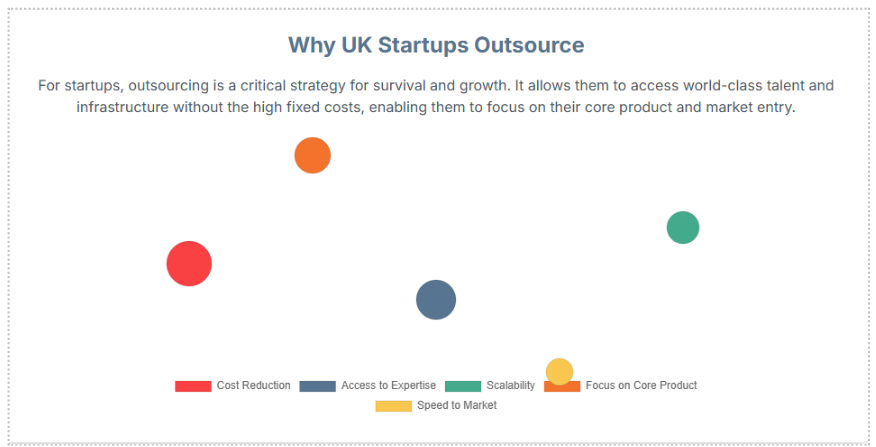
Eventually, Integration, enabled by mongrel outsourcing models, empowers businesses to combine global moxie with original oversight, amplifying the Benefits of Outsourcing in the UK through dexterity and scalability. From nimble Outsourcing for startups seeking growth to established enterprises using Outsourced accounting services for compliance and optimization, success depends on erecting trusted hookups. The period ahead belongs to associations that view outsourcing as a strategic alliance where invention, responsibility, and collaboration define sustainable competitive advantage in the evolving UK business geography.


Recent News

Why Outsourcing Is the Key to
6th November 2025
Why Business Process Outsourcing is the
14th August 2025