
Introduction
UK employment law changed a lot in 2026. More than in the last ten years, combined. The Employment Rights Act 2025 is rolling out in stages. The minimum wage went up in April. Sick pay rules have changed too. Unfair dismissal rules are shifting as well. The template you saved last year may already miss something new.
That’s the actual challenge. Finding a template isn’t difficult. What’s difficult is figuring out what’s valid anymore. And what you need to include before anyone signs anything.
The rest of the terminology can be added in two months’ time, although it would be better to include it right away. This includes information regarding sick pay, pensions, notice period, and handling disputes. You can also mention any group pay agreements you have.
This guide will help you understand what should be included in a UK employment contract in 2026. It will show you how to find a free and good template. It will provide you with a checklist for each new employee that joins your team.
What A UK Employment Contract Actually Is
People mix up three terms a lot. “Employment contract.” “Contract of employment.” And “written statement of particulars.” They sound the same. They’re not quite the same thing.
A contract of employment starts the moment someone accepts your job offer. It doesn’t need to be written down to exist. If you offer a job and they say yes, a contract is already in place. Even with nothing on paper yet.
The law asks for something more specific. Under the Employment Rights Act 1996, you must give staff a written statement of employment particulars. This has to land on or before their first day. Since April 2020, this covers workers too, not just employees. That means casual staff. Agency workers. Zero hours workers. All of them.
Most people search for an “employment contract template” for one reason. They want one document that does two jobs. It should cover the legal basics. And it should cover wider terms too, like confidentiality, notice periods, and how you deal with disputes.
What Must Be Included In 2026
A compliant written statement must cover certain points from day one. Other terms can follow within two months. Or they can sit in a separate document, like a staff handbook.
Day One Must-Haves
Day one must have included the items below. Names of both employer and employee. Job title, or a short role summary. Start a date. Whether past work counts toward service. Pay rate and pay day. Working hours and which days. Holiday days and how they’re working out. Place of work. Length of any trial period.
Terms That Can Follow Within Two Months
Additional clauses may also be included after two months. However, it is better if they are included right from the start. This includes provisions on sick pay, pensions, notice periods, as well as problem-solving/complaint handling. Also mention any collective pay arrangements that you have.
A Note on ACAS
ACAS is the UK’s main body for work issues. It gives out free guides and templates for this. Its advice isn’t legally binding on its own. But courts look at it often. Ignore ACAS’ advice, and you may pay more if you lose a case. Up to 25 percent more.
Where To Get a Free Employment Contract Template UK
ACAS offers free templates for the written statement of particulars. These cover both employees and workers. They’re a strong starting point. They’re built around the legal minimum. And they get updated as the law shifts.
GOV.UK also publishes free guidance and sample wording. Sector bodies like NCVO offer templates too. These are aimed at specific employer types, such as charities and small teams.
Here’s the catch with any free, generic template. It’s written for an average employer. It won’t reflect your industry. Or your notice periods. Or your benefits. Or specific clauses you might need, like non-compete terms for senior staff or IP terms for creative roles.
Treat a free template as your legal floor, not your finished contract. Build on it. Don’t just copy it word for word.
Format matters here too. If you’re after an employment contract template UK PDF, know this. PDFs work well for signing. But they’re harder to edit. Word format is better while you’re still customising the document. Convert it to PDF once it’s final and ready to sign.
Self Employed Contract Template: A Different Document Entirely
This is where a lot of mix-ups happen. So it’s worth splitting this out clearly.
A self employed contract template is not an employment contract template. Hire someone as self employed, and you’re not making an employment link. You’re agreeing with a deal for services instead.
Self employed workers don’t get the same rights as employees. No sick pay in the usual sense. No holiday pay. No unfair dismissal protection in the same way. A self employed contract usually covers the scope of work. Payment terms. What gets delivered. Who owns the finished work. And how either side can end the deal.
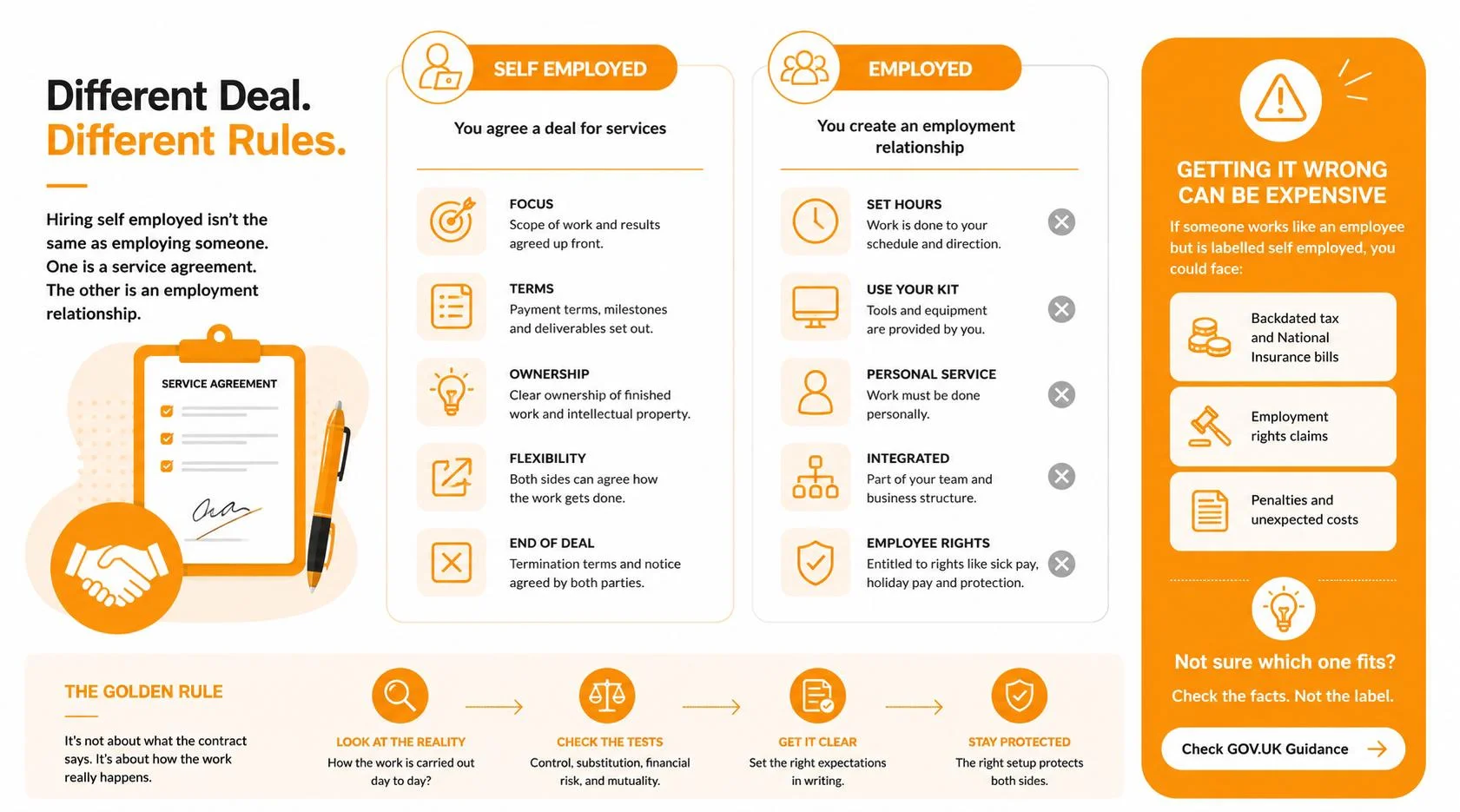
Calling someone self employed when they really work like an employee is risky. HMRC and tribunals look at how the work actually happens. Not just what the paperwork says. If someone works set hours, uses your kit, and can’t send someone else to do the job, calling them a contractor won’t help you. This is sometimes called disguised employment. Getting it wrong can mean backdated tax, National Insurance bills, and employment rights claims landing on your desk.
Not sure if a role should be employed or self employed? Check GOV.UK’s employment status guidance before you draft anything.
What A Sample Contract Structure Looks Like
Most sample employment contract templates follow the same basic shape. It helps to know this layout before you start filling one in.
- Header. States the employer’s name, the employee’s name, and the date the contract starts.
- Role section. Covers job title, main duties, and who the person reports to.
- Pay and hours. States salary or hourly rate, pay day, and normal working hours.
- Leave and benefits. Covers holiday days, sick pay, and any pension details.
- Notice section. States how much notice either side must give to end the contract.
- Signature block. Both sides sign and date the document. Keep one signed copy on file and give one to your new starter.
How To Fill in a Template Step by Step
Step 1.
Start with the free ACAS template as your base. Read it fully first, before you change anything.
Step 2.
Fill in the basic details. Names, dates, job titles, and pay. Keep the wording simple and clear.
Step 3.
Add your own clauses. Think about how long the probation should run. Think about the notice too. Add any private terms you need.
Step 4.
Check the figures. Make sure pay meets current minimum wage rates. Check holiday entitlement matches what the law requires.
Step 5.
Get someone else to read it. A second pair of eyes often catch gaps you missed.
Step 6.
Save the final version in Word first. Then convert it to PDF once it’s ready to sign.
Step 7.
Send it to your new starter before day one. Don’t wait until they walk in the door.
The 2026 Compliance Checklist
Run through this before any new contract goes out. Or when you review contracts, you already have them.
- Pay rates. From 1 April 2026, the National Living Wage for workers aged 21 and over rose to £12.71 an hour. The 18 to 20 rate rose to £10.85. The rate for under 18s and most apprentices rose to £8.00. Check your contracts to match at least these figures. A signed contract can never override the legal minimum. Not even if the employee agreed to less.
- Statutory sick pays. From 6 April 2026, the three waiting days before SSP started were scrapped. Sick pay is now due from day one of absence. The lower earnings limit that used to block lower paid staff from SSP was removed too. So nearly all employees now qualify in some form.
- Holiday records. From 6 April 2026, employers must keep records of annual leave and holiday pay. These need to be kept for at least six years. If your current process doesn’t track this well, it needs to be fixed soon.
- Unfair dismissal timelines. The qualifying period for unfair dismissal is set to fall. From two years down to six months. This change lands in January 2027. Anyone hired from mid 2026 could be covered once it does. Check out your probation and performance steps now. Don’t wait.
- Fire and rehire clauses. Letting someone go and rehiring on worse terms is now classed as unfair in most cases. This hits core terms. Pay. Pension. Hours. If your contract lets you change terms freely, get it checked now.
- Right to work checks. This sits outside the contract itself. But always confirm right to work status before day one. Keep it as a separate step in your hiring process.
Who Gets Left Out by The Standard Template Approach
Generic templates work fine for a simple, full time, UK based employee. They fall short in a few common cases.
First time small business hires
If you’ve never employed anyone before, there’s more to sort than the contract. You need to register as an employer with HMRC. Set up, PAYE. And send the written statement before day one. A template alone won’t walk you through payroll setup for a UK small business.
Zero hours and casual workers
These workers get a written statement, too. Standard templates are built for full-time staff. They often miss the variable hours side of things. They may also miss newer rules on exclusivity. Those are the clauses that stop someone from taking a second job.
Charities and small nonprofits
Many rely on volunteers next to paid staff. The line between the two isn’t always clear. A volunteer agreement is not the same thing as a job contract. Mix the two up, and you can create legal duties you never meant to take on.
Contractors becoming permanent
Someone might start as a contractor. Over time, they start acting like staff members. Fixed hours. Regular days. The same tasks each week. At that point, you may need a proper employee contract. Just extending the old deal won’t fix the real problem.
Overseas or remote hires
Employ someone based outside the UK, and a standard UK template won’t fit cleanly. You may need local advice for that person’s country instead. UK job law does not usually stretch abroad.
What Can Actually Go Wrong
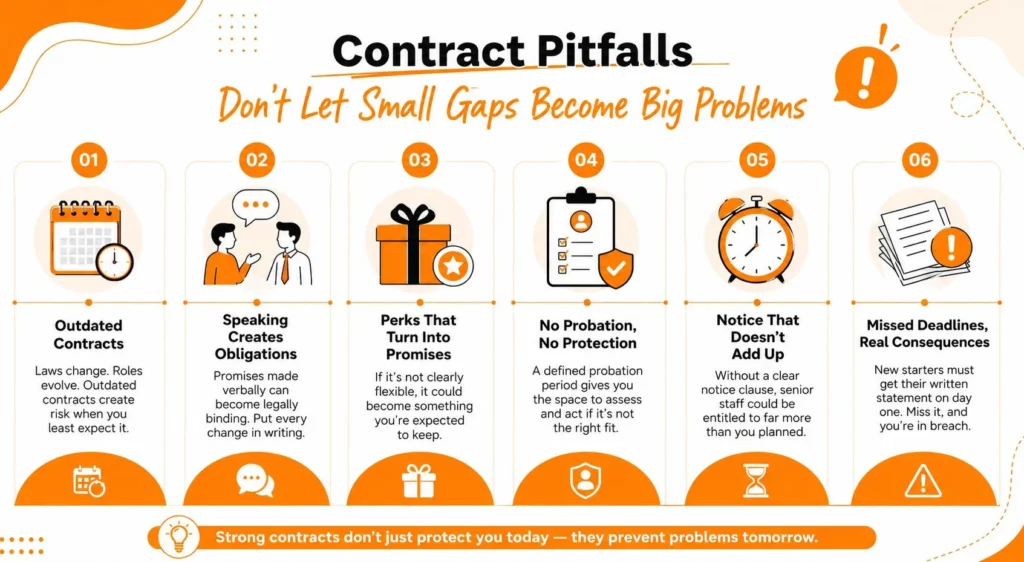
A few issues come up again and again with UK employer contracts.
Contracts that never get updated
Many businesses issue a contract once and never touch it again. Even as pay, law, or job duties shift over time. A stale of contract leaves gaps. Those gaps tend to show up during disputes or tribunal claims.
Verbal promises becoming binding
Say a manager promises a pay rise out loud. Or promises a perk. The staff member relies on it. That spoken promise can become part of the contract. Even with nothing written down. Keep every change to terms in writing, every time, with no exceptions.
Discretionary benefits treated as guaranteed
Some bonuses and perks are meant to stay flexible. Fail to label them clearly, and they can turn into a fixed promise. Always state you can change or remove them at any time.
Missing probation clauses
Set a clear probation period. State its terms too. Skip this, and you lose room to move. You need that room to deal with a new hire early performance. And to use a shorter notice period if things don’t work out.
Notice periods that don’t match reality
Senior staff without a clear notice clause can claim more than you expect if dismissed. Statutory minimums cap out at 12 weeks. But common law can imply longer notice for senior roles without a written term in place.
Missing the written statement deadline
This is a common and avoidable slip. Especially for businesses taking on several new starters at once. Missing day one for even one new hire counts as a breach.
Conclusion
Getting the contract right on day one is only half the job. Pay rates change every April. Sick pay and holiday rules are shifting through 2026 and into 2027. Someone still must catch each change. And apply it across every live contract and every payroll run.
That ongoing admin is where a lot of small and growing businesses lose time. It’s also where mistakes tend to creep in. If your team is already stretched thin with HR paperwork, payroll inputs, and onboarding checklists, it may help to have a structured process take this on.
Eco Outsourcing supports UK businesses with payroll processing and onboarding admin. We keep records organised and pay-run checks consistent, so contract and compliance details don’t slip through the cracks.
Frequently Asked Questions
No. A template becomes binding once it’s filled in, signed, and given to the employee. ACAS templates give you a starting structure. They’re not a finished, enforceable document by themselves.
The written statement covers your legal minimum. Most bosses add more to it. A fuller contract with terms on confidentiality, IP, and other cover. The statement on its own tends to leave gaps.
You can use one base template for most roles. But some roles need more. Senior staff. Technical staff. Client facing staff. These often need extra clauses, like non-compete terms or confidentiality of wording. A basic template usually skips these.
An employment tribunal can award compensation. Usually, two to four weeks’ pay. This applies even with no other claim involved. It’s treated as a standalone breach on its own.
It covers the legal minimum. But small businesses still need to check pay rates, holiday accrual, and probation terms. These need to match actual practice, not just generic wording on a page.