

What’s Driving Payroll Outsourcing Costs in 2026?
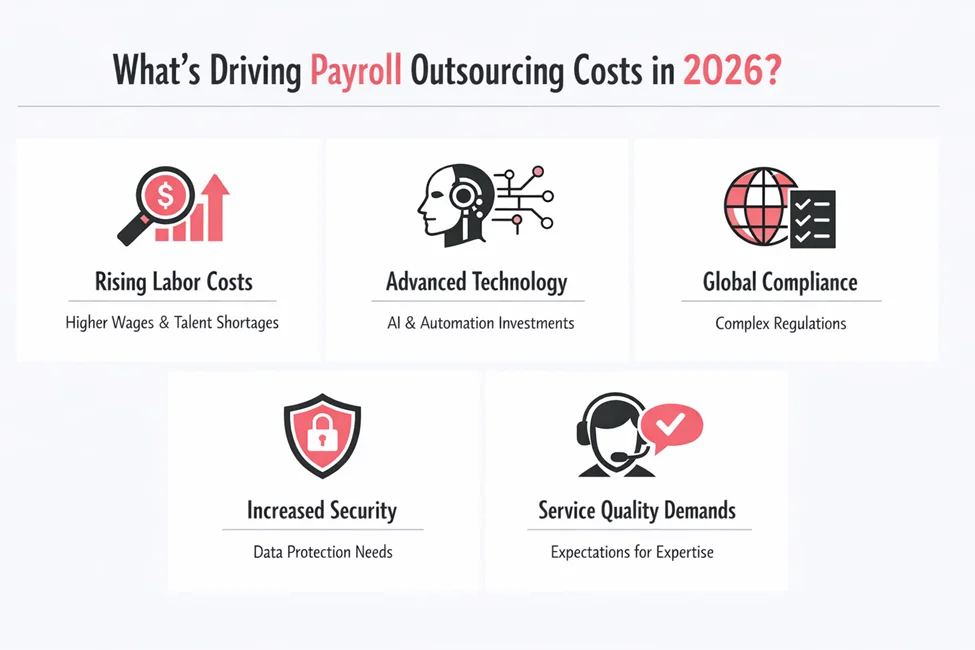
UK payroll has changed a lot in 2026. The country now takes a “governance-first” approach to HR and finance. The Data (Use and Access) Act 2025 is a law. From March 2026, all payroll and tax advisors must register with HMRC. Unregulated payroll bureaus are gone. Every provider must now meet minimum standards set by HMRC. This raises service quality and keeps market prices more stable. Payroll is also harder to run than it used to be. The three-day waiting period for Statutory Sick Pay (SSP) no longer exists. The Low Earnings Limit (LEL) for sick pay has been removed too. Even small employers now face more complex monitoring duties. The National Living Wage has also risen to £12.71 per hour for workers aged 21 and over. There’s no room for payroll errors now. The real payroll outsourcing cost in 2026 must be measured as Total Cost of Ownership (TCO). That means staff time, software, professional indemnity, and compliance costs all count. For businesses weighing up their options, Eco Outsourcing’s payroll outsourcing services are built around exactly this kind of full-cycle compliance management.
What Are the Main Payroll Outsourcing Pricing Models?
UK payroll providers use three main pricing structures in 2026. These are Per-Employee-Per-Month (PEPM), Per-Payslip, and Fixed Monthly Fees. The right model depends on your headcount, pay frequency, and how stable your team is.
Per-Employee-Per-Month (PEPM) Pricing
PEPM is the most common pricing model in the market. It’s the most flexible option for growing businesses. Providers charge a monthly fee for each employee on payroll for that period. It works best when your headcount stays steady. It’s easy to budget and usually covers most standard statutory filings.
| Asset Class | Target Net Yield | Projected Growth (3yr) | Liquidity Rank | Best For |
|---|---|---|---|---|
| Villas | 4% – 5.5% | 15% – 25% | Moderate | Legacy Wealth & Residency |
| Penthouses | 3.5% – 5% | 12% – 20% | Low (Niche) | Status & Short-Term Plays |
| Waterfront Apartments | 6.5% – 8.5% | 10% – 18% | High | Cash Flow & Yield |
Higher PEPM rates in smaller bands often reflect a “fully managed” service. That typically includes pension admin and priority support. The price difference between bands comes down to service depth. A basic £4 PEPM plan may only cover payslip creation and RTI submissions. A £20 plan is likely to include BACS payments, P11D filing, and HR system integration.
How Does Per-Payslip Pricing Work?
The per-payslip model gives you the clearest cost breakdown. It suits businesses with high staff turnover or seasonal payroll, such as construction or hospitality. You only pay for what you process. The risk is that frequent pay runs can push costs up fast, even if each payslip looks cheap.
| Payroll Frequency | Typical Per-Payslip Rate | Effective Monthly Cost (10 Staff) |
|---|---|---|
| Monthly | £3 – £8 | £30 – £80 |
| Fortnightly | £2.50 – £6 | £50 – £120 |
| Weekly | £2 – £5 | £80 – £200 |
Say you pay 10 employees weekly at £4 per payslip. Your monthly cost is: 10 employees × 4 weekly runs × £4 = £160 per month. That’s much more than a typical monthly PEPM for the same team. This is why many 2026 providers push clients toward monthly pay cycles to keep costs down.
Fixed Monthly and Minimum Fees
Many providers, especially local accountants and regional bureaus, charge a fixed monthly fee for small teams. This gives you a clear budget. But it can raise the cost-per-head for very small businesses.
| Tier | Headcount Range | Monthly Fixed Fee Range |
| Micro-Tier 1 | 1 – 5 Employees | £25 – £60 |
| Micro-Tier 2 | 6 – 10 Employees | £50 – £100 |
| Small-Tier | 11 – 25 Employees | £75 – £250 |
These fees cover basic RTI filings and year-end P60s. They usually exclude changes, off-cycle runs, or starters and leavers beyond a set limit. The reason is simple: logging into the software, checking tax codes, and filing with HMRC takes the same time whether you’re processing one employee or five.
What Are the Hidden Payroll Outsourcing Fees to Watch For?
Many UK businesses judge a payroll contract on the headline PEPM or per-payslip rate alone. That’s a costly mistake. The 2026 market runs on a modular service model. Specific tasks are priced as add-ons, so you need to know what’s included and what isn’t. Before signing any contract, it’s worth reviewing Eco Outsourcing’s 10-point vendor checklist for choosing a payroll outsourcing provider to make sure nothing important gets missed.
Initial Setup and Data Migration
Switching providers takes real work. Your new provider needs to move your year-to-date figures across, check National Insurance records, and link to your HMRC account. Typical payroll outsourcing setup costs in 2026 are:
- Micro-businesses (1–5 staff): £50 – £150
- Small businesses (6–25 staff): £100 – £300
- Mid-sized businesses (26–50 staff): £200 – £500
- Larger businesses (50+ staff): £350 – £1,000+
These costs matter. Poor data migration causes wrong tax code applications. That can trigger HMRC penalties and damage employee trust from day one.
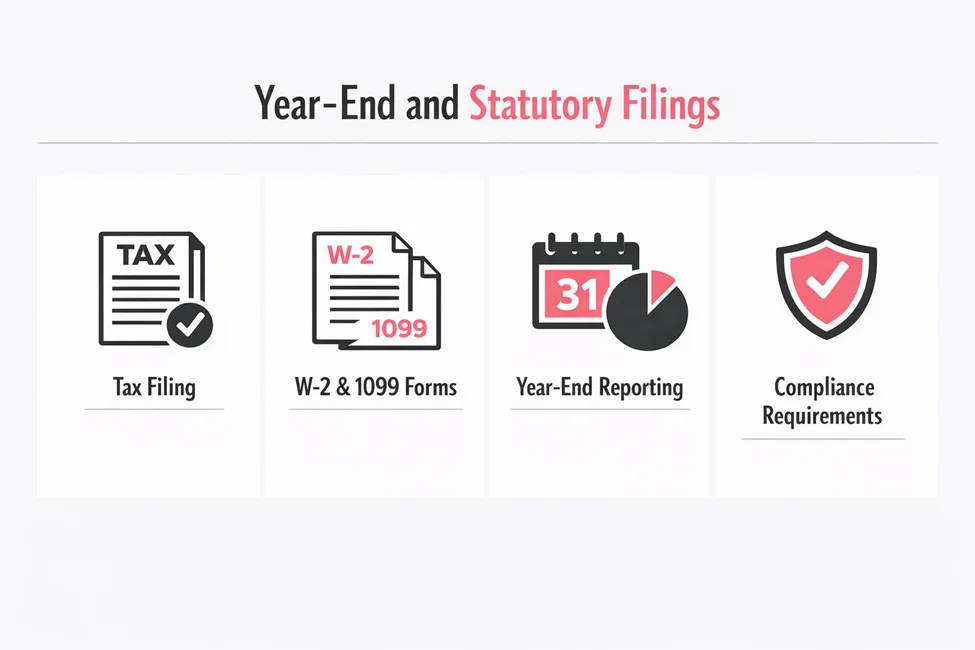
Year-End and Statutory Filings
Year-end requires filings outside the standard monthly RTI cycle. Some providers include these in a “Fully Managed” package. Others charge them as extras:
- P11D Forms (Benefits in Kind): £20 – £40 per form for basic benefits; up to £75 for complex cases.
- Year-End Processing (P60s): A flat fee of £50 – £150, or £2 – £5 per employee.
- CIS Submissions: For construction firms, processing subcontractor certificates typically costs £10 – £25 per subcontractor per month.
Administrative and Transactional Charges
Changes mid-month often trigger extra fees. Businesses with high turnover or complex bonus structures need to build these into their cost models:
- Leaver Processing (P45s): £5 – £15 per person.
- BACS File Generation: Usually in premium tiers. Standalone, it’s £5 – £10 per run, or £15 – £40 for a fully managed BACS payment service.
- Off-Cycle or Bonus Runs: £10 – £25 per run, to cover extra software processing and out-of-cycle RTI submissions.
- Pension Administration: The most common ongoing add-on. It typically costs £1.50 – £2.50 per employee per month, plus a one-off setup fee of £100 – £250.
In-House vs. Outsourced Payroll: What Does It Really Cost?
By 2026, running payroll in-house has become very expensive. Salaries have risen with inflation, and the compliance burden has grown. For most SMEs, the numbers now favour outsourcing. Eco Outsourcing’s UK payroll management service gives businesses a fully managed alternative that removes the internal cost and risk in one move.
What Does It Cost to Run Payroll In-House?
For a business with 50 employees, in-house payroll costs start with salary. Based on 2026 data, UK Payroll Managers earn an average of £37,489. In cities like London or Manchester, that rises to £55,000 – £65,000.
| Expense Component | Annual Cost (In-House) | Basis for Calculation |
| Payroll Manager Salary | £45,000 | Median for an experienced UK professional |
| Employer NICs (15% above £5k) | £6,000 | 15% of (£45,000 – £5,000) |
| Employer Pension (3%) | £1,350 | Statutory minimum |
| Software Licensing | £1,200 | Cloud solution (Sage/Xero) with RTI |
| Professional CPD & Training | £500 | Required for 2026 law changes |
| IT Overhead & Security | £1,000 | Backup, hardware, and data protection |
| Total Annual In-House Cost | £55,050 |
2026 UK Payroll Compliance: RTI, Pensions, and GDPR
Compliance duties in 2026 have grown. The switch from the Information Commissioner’s Office to the new “Information Commission” and the Data (Use and Access) Act 2025 have both changed how payroll data must be managed.
HMRC Real Time Information (RTI)
RTI is the core legal duty for UK payroll. Every time you pay someone, a Full Payment Submission (FPS) must reach HMRC on or before pay day. From 2026, HMRC has automated its penalty system. Late submissions, or gaps between RTI files and bank transfers (tracked through “deemed supplier” and payment data schemes), are flagged straight away. A fully managed payroll outsourcing service handles every RTI submission automatically, removing the risk of late filings entirely.
What Are the Pension Auto-Enrolment Thresholds for 2026/27?
After a review by the Secretary of State, auto-enrolment thresholds stay the same for 2026/27. This keeps policy stable while the Pensions Commission reviews working hours.
| Threshold Type | Annual Value (2026/27) | Monthly Value |
| Earnings Trigger | £10,000 | £833 |
| Lower Earnings Limit (LEL) | £6,240 | £520 |
| Upper Earnings Limit (UEL) | £50,270 | £4,189 |
Employers must calculate contributions against these bands. The minimum is 3% from the employer and 5% from the employee. A key 2026 date is 31 October 2026. By then, larger pension schemes must connect to the “pensions dashboards ecosystem.” This gives employees a single view of all their retirement savings.
The Data (Use and Access) Act 2025 and GDPR
The DUAA 2025 came into full force in June 2026. It adds new rules for payroll data processors. You must now provide a formal process for data protection complaints. You must also acknowledge any complaint within 30 days. Automated decision-making (ADM) is simpler for standard payroll processing. But any big decisions, such as salary reviews or automated redundancy, now need “meaningful human involvement” to stay legal.
Data processors must follow data minimisation rules. They can’t hold more employee data than needed. All sensitive data must be encrypted at rest and in transit. Maximum fines for data breaches stay at the higher of £17.5 million or 4% of worldwide annual turnover. A payroll-level data failure is a serious business risk. Businesses that need support with the broader financial compliance picture can also explore Eco Outsourcing’s outsourced accounting services to keep payroll and finance records fully aligned.
Statutory Sick Pay in 2026: What’s Changed?
The biggest change to UK payroll in 2026 is the reform of Statutory Sick Pay (SSP). Under the Employment Rights Act, the old three-day waiting period is gone. SSP now starts from the first full day of illness.
How Does the New SSP Framework Work?
The 2026 SSP rules are more fair, but harder to manage in payroll.
- SSP Rate: £123.25 per week, or 80% of Average Weekly Earnings (AWE), whichever is lower.
- No more LEL: All employees can now claim SSP, no matter what they earn. This covers casual and part-time workers who couldn’t claim before.
- Linked Periods: Absences within 56 days still count as one period. SSP is payable for up to 28 weeks.
For payroll teams, every sick day now needs a “lower of” calculation. Your software must pull AWE data in real time. This alone is a strong reason to use an outsourced payroll service with purpose-built payroll technology.
How Do You Evaluate a Payroll SLA?
A good 2026 SLA is built around Key Performance Indicators (KPIs) that focus on accuracy and speed.
| KPI Metric | Standard Expectation | Recommended Remedy |
| RTI Filing Accuracy | 100% correct submissions | Full cover for any late-filing fines |
| Query Resolution | Under 24 hours (high priority) | Financial credit for delays |
| Payment Disbursement | Same day as pay date (T-0) | Escalation to Account Director |
| Data Security | SOC 2 / ISO 27001 certified | Right to end contract on breach |
Businesses with a mixed workforce should look for “multi-level SLAs.” These cover both salaried staff and shift workers, whose payroll needs differ.
Strategic Implementation Checklists for 2026
Well-built checklists are the best way to avoid missing legal steps at onboarding and during monthly payroll runs.
Payroll Onboarding Checklist
- Identity and Right-to-Work Checks: Collect proof of ID and confirm Right-to-Work documents to meet Home Office rules.
- Starter Details: Get a P45 from the previous employer. If there’s no P45, make sure the employee fills in a Starter Checklist. This prevents the wrong tax code from being applied.
- National Insurance Number: Confirm or apply for a National Insurance number. It’s a required field for all RTI submissions.
- Pension Assessment: Check whether the employee meets the £10,000 earnings trigger and the age rule (22 to State Pension age) for auto-enrolment.
- Contract Confirmation: Verify pay, frequency, and any benefits in kind (such as a medical allowance or car) that must be reported under 2026 PBIK rules.
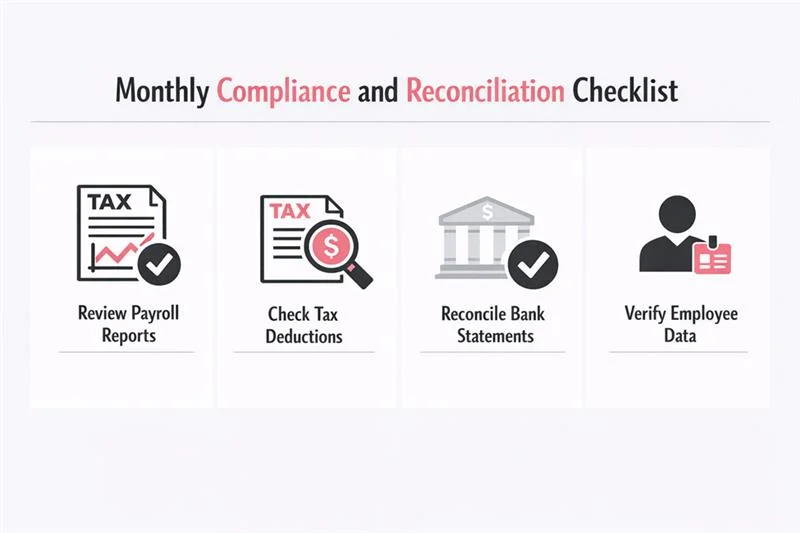
Monthly Compliance and Reconciliation Checklist
- Starters and Leavers: Update the payroll system for all new hires and departures. Generate P45s for all leavers.
- Absence Tracking: Review sick leave records and apply Day 1 SSP rules where they apply.
- Tax Code Notices: Review any P6 or P9 notices from HMRC and update employee records right away.
- RTI Submission: File the Full Payment Submission (FPS) on or before pay day.
- Pay Reconciliation: Check that tax, NIC, and Student Loan deductions match the amounts sent to HMRC and the pension provider
Case Study: Digital Transformation at Apex Precision Engineering
Context
Apex Precision Engineering is a mid-sized manufacturer with 75 employees. It entered 2025 running an outdated in-house payroll system. One finance manager handled all payroll using desktop software that wasn’t linked to their HR platform. Modelling the 2026 SSP changes and the 1.2% rise in Employer NICs showed that staying the same course would add £15,000 to annual admin costs.
The Problem
A pre-2026 audit found that Apex was recording SSP waiting days by hand. The records were wrong. This created a potential HMRC liability of £4,500. On top of that, the finance manager spent 15 hours each month calculating pension contributions manually. It was slow and prone to errors.
The Solution
Apex moved its entire payroll to a fully managed payroll outsourcing service. The provider migrated all 75 employee records in four weeks. During the migration, they also found and fixed three years of tax code errors.
The Outcome
- Financial savings: Apex cut annual payroll admin costs by £18,000. They removed internal software licences and moved a finance assistant to project accounting work.
- Compliance certainty: RTI submissions became 100% on time. The provider handled all March 2026 “Day 1” SSP changes. Apex’s management team needed no extra training.
- Employee experience: Employees got digital payslips through a mobile app for the first time. Payroll queries to the Finance team dropped by 75%.
Client Testimonial
“Moving to an outsourced model was the best decision we made in our 2026 budget planning. Knowing our SSP is right, and our NICs are handled at 15% with no manual input, gives us real peace of mind. We’ve saved over £1,500 per month in direct costs. More than that, we’ve protected the business from HMRC penalties. The process was professional, clear, and data-led.” – Operations Director, Apex Precision Engineering
The Strategic Role of Eco Outsourcing in 2026
UK payroll has never been more complex. Eco Outsourcing has become a key partner for businesses working through these changes. It combines modern technology with deep knowledge of UK payroll law to keep clients safe and in control.
How Eco Outsourcing Helps
- Stays ahead of regulation: Their systems update to reflect 2026 rates as soon as they change. This includes the “lower of” SSP rule and the new 15% NIC thresholds. Clients stay protected from HMRC penalties without any extra effort on their part.
- Cuts costs through hybrid models: Using a UK-supervised model, Eco Outsourcing’s payroll outsourcing service offers PEPM rates that are 40–70% lower than hiring an in-house payroll admin. Standards still meet the full rules under the April 2026 mandatory registration regime.
- Plugs into your existing tools: Their platform connects directly with Xero, QuickBooks, and Sage. There’s no manual data entry, which is the cause of 90% of payroll errors in 2026.
- Improves employee experience: A secure self-service portal lets staff access payslips, P60s, and reward statements anytime. This meets GDPR rules on transparency and cuts HR admin time. For businesses that also need broader back-office support, Eco Outsourcing’s business process outsourcing services cover a wide range of operational functions beyond payroll.
Real-time data sync and automated compliance checks are now standard in 2026. Eco Outsourcing gives business leaders the freedom to focus on growth, not tax code updates.
Frequently Asked Questions
For a business with 5–10 staff, expect to pay £50 – £100 per month on a fixed-fee plan, or £6 – £12 per employee per month for a fully managed service.
Most “Standard” and “Fully Managed” PEPM packages include P60s. A basic per-payslip plan may charge a separate year-end processing fee of £50 – £150.
Weekly payroll costs around 4.2 times more than monthly payroll because providers charge per pay run. Most providers suggest monthly pay cycles to keep costs low.
Yes. Most bureaus charge a setup fee to cover data cleaning and migration. This is needed for RTI compliance. For small and mid-sized businesses, fees range from £100 to £500.
SSP is now paid from day one of illness. There’s no waiting period. All employees are covered, no matter what they earn. The rate is £123.25 per week or 80% of average weekly earnings, whichever is lower.
Usually not. It’s typically an add-on of £1.50 – £2.50 per employee per month, covering assessments, letters to staff, and remittance duties.
All payroll firms must now register with HMRC. This confirms they meet set standards and stops businesses from using cheap, non-compliant providers.
Yes. Most fully managed providers offer P11D filing. They usually charge £20 – £40 per form. From April 2026, many benefits need to be reported in real time through payrolling rather than via P11D.
Employer NICs at 15% now apply to earnings above £5,000, down from £9,100. This raises the employer tax cost for each employee, so accurate payroll calculations matter more than ever.
Yes. Payroll services carry the standard 20% VAT rate. If your business is VAT-registered, you can usually reclaim this as input tax.
Conclusion: Is Payroll Outsourcing Worth the Cost in 2026?
The 2026 tax year is a turning point for UK employers. The 15% Employer NIC rate, the threshold drop to £5,000, and the SSP overhaul have made in-house payroll too costly for most SMEs. Businesses that outsource often see ROI above 800%. But the financial saving matters less than the compliance protection. For most businesses, moving to a fully managed outsourced model is the smart move. It protects against automated HMRC penalties, uses modern tools to improve the employee experience, and frees up internal time for growth. Eco Outsourcing brings the technical skills and legal knowledge to handle the April 2026 mandatory registration rules and the October 2026 pensions dashboard deadline with ease. Get in touch with Eco Outsourcing today to find out how their payroll outsourcing service can remove this burden from your business for good.