
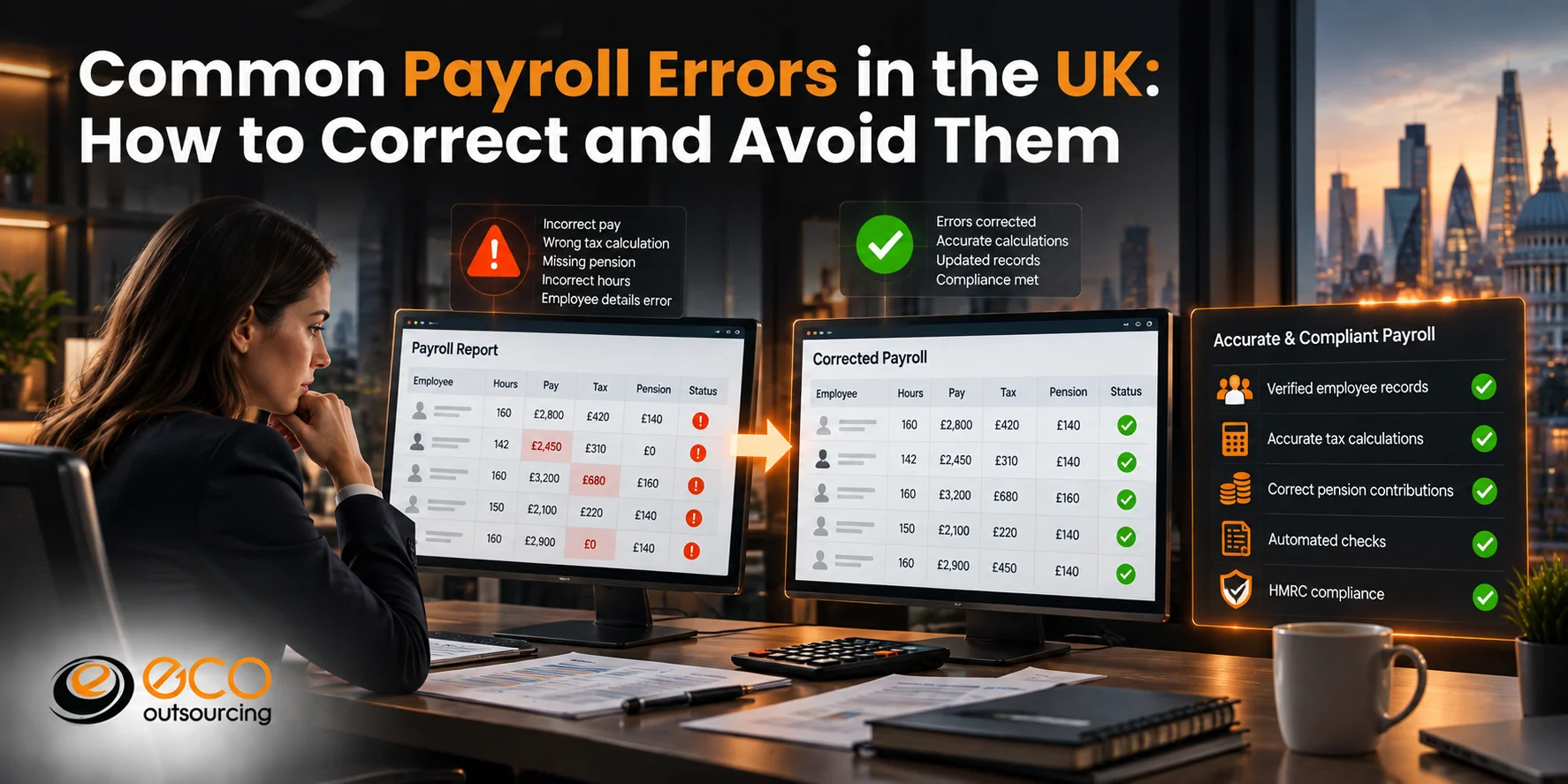
Payroll mistakes happen more often than most small UK business owners think. A single typo can cost your business real money. In 2026, studies show many UK workers and growing UK firms face pay mistakes each year. These errors do not just annoy staff members.
Also, they can trigger HMRC fines, legal claims, and lost trust. That is where a trusted payroll partner makes all the difference. At Eco Outsourcing, we fix these problems every single day. So, this article shows you the common payroll errors and how to correct payroll errors UK firms face. You will also learn how to correct and avoid them for good.
What Are Payroll Errors and Why Do They Happen?
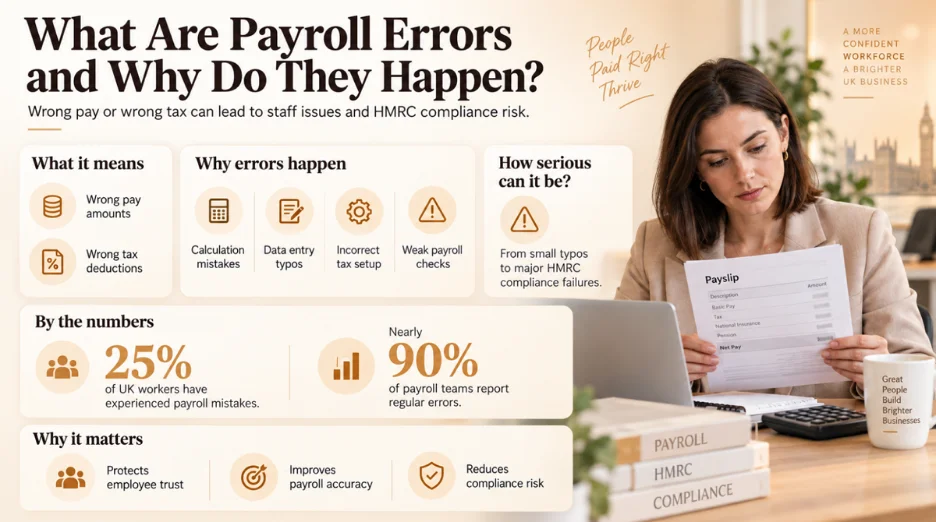
Payroll errors mean wrong pay amounts or wrong tax taken from staff. This kind of error occurs when pay calculations or tax deductions go wrong during processing. These mistakes range from small typos to serious compliance failures with HMRC rules. About 25% of UK workers have faced payroll mistakes at some point. Nearly ninety percent of payroll teams report regular errors in their operations.
What Are the Most Common Payroll Errors in the UK?
Payroll mistakes come in many different shapes and forms across UK businesses. Below are the 7 most common payroll errors that business owners should watch for:
- Wrong Tax Code Applied
The wrong tax code is one of the most common payroll errors. It often happens when a new starter form arrives at your firm late. Staff may then pay too much or too little income tax each month. HMRC issues updated codes often, so payroll teams must check them regularly. For 2025 to 2026, 1257L was the common tax code.
- National Insurance Miscalculations
National Insurance mistakes happen when the wrong category letter is used for someone. Each employee falls into a specific NI category based on their age or job. Using the wrong letter changes how much NI gets deducted from their pay. Rates and thresholds change every new tax year starting each April in the UK.
- Late or Missed Payments
Late payments happen when staff receive their wages after the agreed payday. Even one day late can break rules set by UK employment law. Cash flow problems and manual processes often cause these frustrating payment delays. Staff quickly lose trust once late pay becomes a regular company pattern. Employers should understand payroll errors law before making deductions or correcting employee pay.
- Overpayments and Underpayments
Overpayments and underpayments happen when wrong hours or rates get entered by mistake. A single misplaced number can throw off an entire staff member’s pay packet. Overtime bonuses and shift changes are common spots where this error occurs. Underpaid staff may raise formal complaints, while overpayments create awkward repayment conversations.
- Pension Auto-Enrolment Errors
Auto-enrolment errors happen when deadlines or contribution amounts get handled incorrectly. Every eligible employee must join a workplace pension scheme within a set time. Missing this deadline can bring a fine from the Pensions Regulator directly. Wrong contribution percentages often go unnoticed until an audit finally uncovers them.
- Manual Data Entry Mistakes
Manual payroll errors often happen when figures are entered or copied between systems. The manual entry mistakes include typos in names, bank details, or recorded hours. These small slips happen most often when staff type figures directly by hand. A single wrong digit in a sort code can delay an entire payment. Automated checks can help eliminate manual payroll errors caused by repeated data entry.
- Late RTI Submissions
Late RTI submissions happen when reports reach HMRC after the required deadline. Real Time Information must be sent to HMRC on or before each payday. Missing this deadline by even one day can trigger an automatic penalty. Fines often start at around one hundred pounds for each late month.
What Causes Payroll Errors in UK Businesses?
Small mistakes in payroll processes can quickly create larger problems for businesses. However, regular checks can identify payroll processing errors before payments reach employees. Below are common causes and common payroll errors that UK businesses should understand:
- Manual Processes: Spreadsheets increase the chance of small human error during payroll runs. One wrong number can spread across the sheet and cause bigger problems.
- Outdated Software: Old systems often miss new tax or National Insurance rate changes fast. This leads to wrong deductions that can upset staff and bring fines.
- Poor Data: Employee records are not kept clean, current, or accurate in poor systems. Wrong names, dates, or bank details cause payroll mistakes that are avoidable.
- Frequent Changes: UK tax law updates often occur throughout each tax year without much warning. Payroll teams must stay alert or risk using outdated pay rules.
- Staff Shortage: One person handles too many payroll tasks alone in many small firms. This raises the risk of missed deadlines and small, costly mistakes.
What Does UK Payroll Law Say About Errors?
Under UK law, employers must pay staff the correct amount on time. The Employment Rights Act protects workers from unlawful wage deductions or delays. So, employers must also send accurate figures to HMRC through RTI each pay run. Staff can raise a claim at an employment tribunal within 3 months.
What Are the Consequences of Payroll Errors?
Payroll mistakes cost far more than most business owners first realise. Review the common consequences of payroll errors and simple ways to prevent them:
| Payroll Error | Common Cause | Possible Consequence | Simple Fix |
| Wrong tax code | Starter form filed late | Staff overpay or underpay tax | Update the tax code with HMRC quickly |
| Late RTI report | Missed payday deadline | Fine of around £100 per month | Submit the FPS on or before payday |
| Late PAYE payment | Poor cash flow planning | Interest charges plus a late payment penalty | Set monthly payment reminders in advance |
| Wrong NI category | New hire set up incorrectly | Backdated correction and possible fine | Check the NI letter for every new starter |
| Pension errors | Missed enrolment deadline | Fine from The Pensions Regulator | Automate enrolment within your payroll software |
How Can I Correct a Payroll Mistake in the UK?
Fixing a payroll error does not need to feel scary or complicated at all. Follow these simple steps below to correct any mistake properly and quickly:
Step 1. Spot And Confirm the Payroll Error
Check the employee’s payslip against their hours and agreed pay. Look for wrong wages, tax, deductions, overtime, or missing payments. Confirm the exact payroll error before making any changes to employee records or calculations.
Step 2: Tell the Affected Employee
Tell the employee about the payroll error as soon as you confirm it. Be honest about the mistake and how long the fix will take. Clear communication builds trust and stops small errors from turning into big complaints.
3. Adjust The Next Payroll Run
For many small payroll errors, the correction can happen during the next pay run. Update the correct wages, tax, deductions, or missing payments in your payroll software. Moreover, check the new figures carefully before approving the employee’s next payment. Correcting payroll errors quickly helps prevent the same mistake from affecting future payments.
Step 4. Update HMRC Payroll Records Correctly
Some payroll mistakes also need correction in your HMRC records. Use your payroll software to send the required correction through an updated Full Payment Submission. Check the corrected figures carefully and keep records showing what changed and why.
What to Do If an Employee Is Paid the Wrong Amount?
Wrong employee payments need quick checks to correct payroll errors before repetition.
Read the given table to find common problems and suitable solutions below:
| Situation | What To Do | Why It Matters |
| If overpaid | Explain the mistake and agree on a fair repayment plan together. | Builds trust and avoids sudden money stress for the employee. |
| If underpaid | Pay the missing amount in the very next payroll run. | Keeps staff confident their pay is handled fairly and quickly. |
| Always | Communicate clearly with the employee about what went wrong. | Silence can make staff feel ignored or undervalued after mistakes. |
How to Correct an Incorrect PAYE Tax or National Insurance Deduction?
PAYE and NI mistakes need careful, step-by-step correction. Most payroll software allows you to adjust figures directly. Thus, follow the steps below to fix payroll errors:
- Use your payroll software or HMRC tools to adjust the figures.
- Recalculate tax and NI for the affected pay period straight away.
- Issue a corrected payslip so the employee sees the right numbers.
- Report the change to HMRC through your next FPS submission.
Can a Payroll Error Be Corrected in the Next Pay Run?
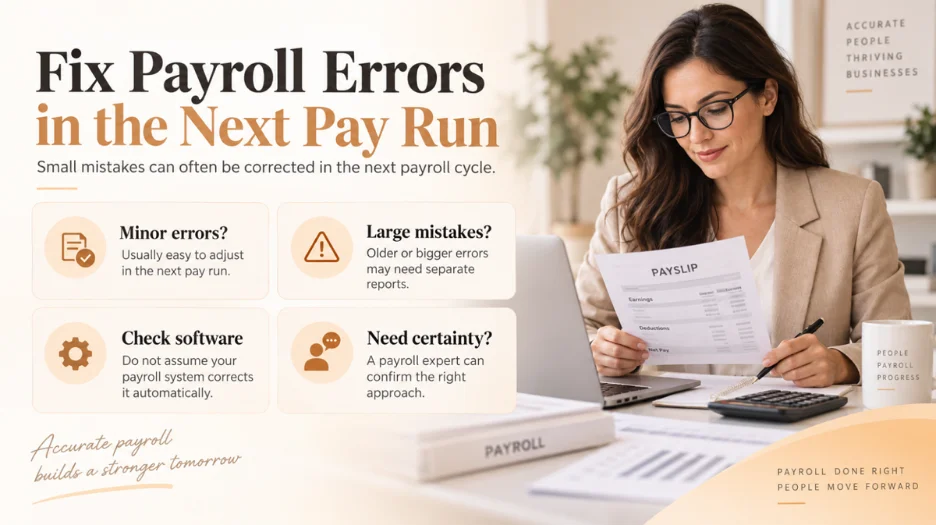
Yes, many small payroll errors can be fixed easily in the next cycle. If the mistake is minor, adjust it in payroll. Larger errors, like months of wrong pay, need separate reports. Always check with your payroll software before assuming automatic corrections. When unsure, a payroll expert can confirm the right approach.
What Happens If an Employer Reports Incorrect Payroll Information to HMRC?
Reporting wrong figures to HMRC creates real compliance risk. You must submit a correction through your Full Payment Submission. This update tells HMRC the accurate pay and tax details. Late or repeated incorrect reports can trigger automatic penalties. Fines often start small but grow with repeated mistakes. Additionally, fixing errors quickly keeps your business safely off HMRC’s radar.
How Can You Avoid Payroll Errors in the Future?
Explore the given steps to avoid payroll errors in the coming days:
- Use trusted payroll software instead of manual spreadsheets or paper forms.
- Double-check employee data every time someone joins or leaves.
- Run a full payroll audit at least once every three months.
- Train your payroll staff on the latest HMRC rules and deadlines.
- Set calendar reminders for every tax and pension payment deadline.
- Keep one clear record system instead of scattered spreadsheets and notes.
What Is the Best Error-Free Payroll Solutions for Small Companies?
Small businesses often lack a full internal payroll team. Cloud-based payroll software offers an affordable, accurate starting solution. Outsourcing payroll to experts removes the risk almost entirely. A simple compliance checklist also helps catch missed steps early. Many small UK firms now outsource payroll for real peace of mind.
How Do You Fix Payroll Errors in QuickBooks?
QuickBooks makes correcting payroll mistakes straightforward for users. Open the payroll section and select the incorrect pay run. Edit the affected employee’s hours, rate, or deductions directly. QuickBooks then recalculates tax and NI automatically for you. Always review the corrected payslip before sending it out.
How Do You Correct Payroll Errors in Sage?
Sage payroll also allows quick correction of most common mistakes. Locate the pay run containing the error inside the Sage. Use the rollback or correction feature to undo it. Re-enter the correct figures and reprocess that specific pay run. The Sage will then update your RTI submission to HMRC automatically.
Frequently Asked Questions
Common errors include wrong tax codes and National Insurance amounts during payroll. Late payments and missed records can also create problems for employers. Simple checks before payday can help prevent these mistakes from repeating.
First, find what went wrong and check the affected payment details. Tell the employee about the issue and explain your planned fix. Then update payroll records and send any needed information to HMRC.
Check the payment against employee records and approved working hours. Tell the employee clearly why their payment was not correct. Fix the amount quickly and keep a clear record of changes.
Check the employee record and compare the deduction with payroll details. Enter the correct figures into your payroll system before final approval. Give the employee a new payslip showing the updated amounts clearly.
Small mistakes can often be fixed during the next pay run. Check the error early so you have enough time for corrections. Older or larger mistakes may need extra steps with HMRC.
Check the incorrect report and find which details need changing first. Send the correct information through your payroll system as soon as possible. Keeping accurate reports helps prevent further issues and possible penalties.
Conclusion
Payroll errors are common but they do not have to control your business. Every mistake in this guide covered has a clear and simple fix available. The real goal is catching errors early and stop them before they start.
That is exactly where Eco Outsourcing steps in to support your business. Our payroll experts handle every detail from tax codes to HMRC reports. We pair years of hands-on UK payroll knowledge with modern software tools.
Your staff get paid right, and your firm stays fully compliant every time. Stop losing time and money to payroll for mistakes you can easily avoid. Book your free session with Eco Outsourcing and let our team take over. We will protect your business from fines and give your staff real confidence.